
By Daniel Schulz, residir GmbH · Last updated: 14 October 2026
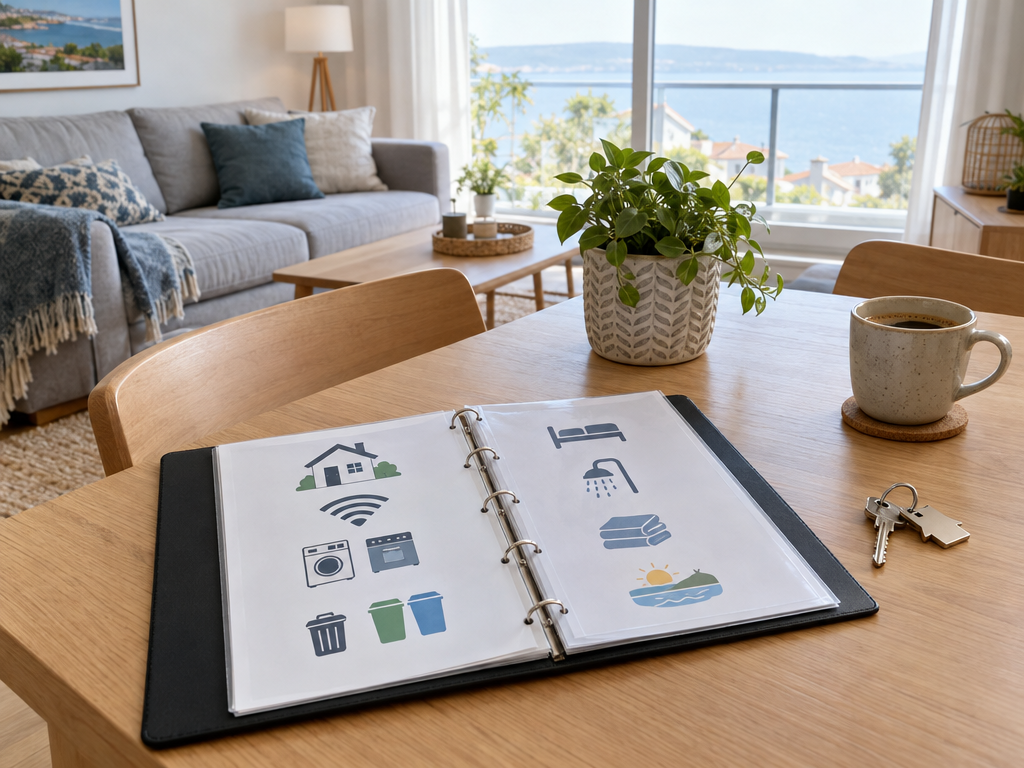
A welcome book for a holiday rental brings together everything guests need to know during their stay: arrival and check-in, Wi-Fi, appliances, rubbish, emergency numbers, public transport, shopping and check-out. It saves the host phone calls and the guest a lot of searching. Whether printed or digital, what matters is that the information is accurate and the most important details are on the first page.
We are currently fitting out a building with 54 apartments in Lehel, so we are thinking hard ourselves about which guest information is genuinely needed. This guide covers the contents, an outline you can use as a template, the pros and cons of digital versions and an example of local information for Lehel. Information correct as of October 2026.
In this article:
- What is a welcome book for?
- What guests get out of it
- What to include in a welcome book
- Template: an outline to copy
- Digital or printed?
- Multilingual guest information
- Tips for creating one
- Data protection
- Example from Lehel
- Conclusion
- Frequently asked questions
| Section | Content | Tip |
|---|---|---|
| Welcome | short welcome text, contact details | two or three sentences are enough |
| Arrival and check-in | address, keys, access | also send by email in advance |
| Wi-Fi and appliances | network name, password, quick guides | put on the first page |
| Rubbish and ventilation | bins, location, sorting | photos of the bins help |
| Emergencies | 112, 110, 116117, host | include the apartment’s address |
| Local area | public transport, parking, shopping, restaurants | walking times instead of adjectives |
| Check-out | time, keys, lights, windows | short list at the end |
Welcome book for a holiday rental: what it is for
Most guest questions come up again and again: what is the Wi-Fi password? How does the dishwasher work? Where does the glass recycling go? A welcome book answers these questions once in writing, rather than the host explaining them over the phone for every booking. In a hotel, reception takes care of this; in a holiday apartment with self check-in, the welcome book is often the only source of information on site.
A holiday apartment welcome book is neither a contract nor a rulebook. The house rules, such as quiet hours or a smoking ban, belong in a separate set of house rules that guests can see before booking. The welcome book can refer to them, but should not replace them. The guest book for a holiday rental is something different too: guests write in the guest book, while the host writes the welcome book.
Welcome books in hotels and holiday apartments
Hotels commonly have a guest directory too, usually as an in-room folder with breakfast times, spa and room service. In a holiday apartment the focus is different. Guests cook for themselves, sort their own rubbish and have to operate appliances without help. That is why the welcome book here is more practical and needs more instructions.
What guests get out of a good welcome book
From a guest’s point of view, the welcome book is the first thing you look for after a long journey. If you arrive late in the evening, you want to know within two minutes what the Wi-Fi is called, where the nearest supermarket is and what time you need to leave on departure day. If that is clearly set out on the first page, the apartment immediately feels familiar.
Guests should therefore not wait until the last day to open it. A quick look straight after arrival saves questions later, for example about the heating, the hob or how check-out works. If you book one of our holiday apartments in Munich, ideally you will also find tips there that are not in any guidebook: the bakery round the corner, the shortest route to the U-Bahn, the quiet spot by the Isar.
What goes in a welcome book? The contents in detail
The following sections cover almost any holiday apartment. Not every point needs its own page; some fit into two lines.
Welcome and contact details
A short welcome text is enough, plus the name of the host or contact person and how to reach them: phone, message, email, with times. If there is a stand-in for holidays or illness, include their number too.
Arrival and check-in
The full address including floor and doorbell name, the route from the station or airport and a description of the check-in. With a key safe or code lock: exactly where it is, how it works and what to do if the code does not work. Guests need this information before arrival, so it should also go in the booking confirmation.
Wi-Fi, appliances and heating
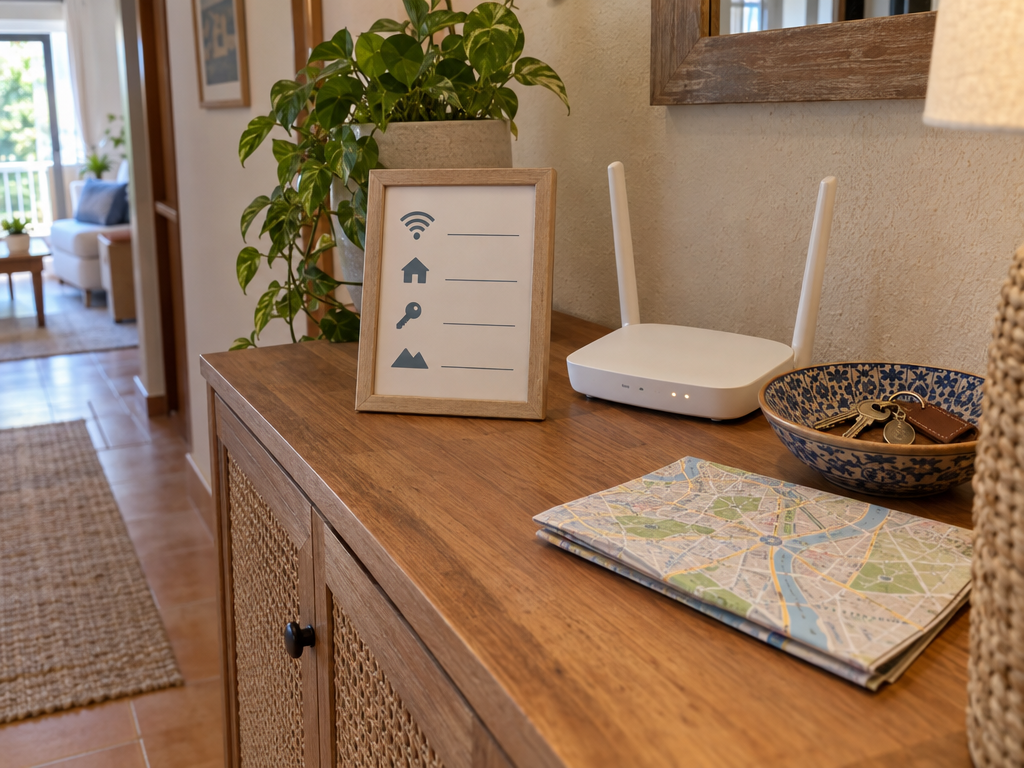
The network name and password are best placed on the first page or on a card next to the router. For the hob, oven, dishwasher, washing machine, coffee machine, TV and heating, a few short steps with a photo of the control panel are enough. Nobody reads full manufacturer’s manuals; those can stay in a drawer.
Rubbish and ventilation
Waste separation is often new to guests from abroad. Explain which bin is for what, where the bins are and where glass and packaging go. In Munich there are recycling points (Wertstoffinseln) on the street for glass and packaging in many areas, but the rules can vary by building and district. So write down exactly what applies in your building, ideally with a photo.
Emergency numbers
- 112: fire brigade and ambulance, free of charge throughout Europe
- 110: police
- 116117: out-of-hours medical service
- Host or stand-in: number for problems with the apartment, such as a water leak or power cut
- Apartment address: so guests can give it over the phone in an emergency
Doctors and pharmacies
List the nearest GP surgery and the nearest pharmacy with walking times. For nights and weekends, every pharmacy displays a notice showing the nearest emergency pharmacy, and the regional chambers of pharmacists also offer an online emergency pharmacy finder. In life-threatening situations, always call 112.
If guests are travelling with pets, include the nearest vet with an emergency number, plus tips on dog parks or walks along the Isar. If you open your apartment to guests looking for dog-friendly apartments in Munich, do not forget this page.
Public transport and parking
The nearest U-Bahn, S-Bahn, tram and bus stops with walking times, plus a note on where guests can buy tickets. For guests with a car: is there a parking space, how do you get into the underground car park, and where is on-street parking allowed? Many of Munich’s central districts have residents-only parking; our guide to parking in Munich explains the details.
54 apartments in Lehel from autumn 2027
From autumn 2027, residir GmbH will be letting a total of 54 apartments of between 25 and 50 m² at Ländstraße 6, each with its own kitchen, fast Wi-Fi, towels and bed linen, plus 24-hour safe check-in. Lehel U-Bahn station and Isartor S-Bahn station are just a few minutes’ walk away. You can find out how the building works on our page about our boarding house in Munich.
Shopping and restaurants
The nearest supermarket, a bakery and a market with opening hours. In Bavaria, shops generally close at 8 pm on weekdays and almost all are shut on Sundays, when it is mainly shops in large railway stations and at the airport that are open. Guests from other countries often overlook this.
For restaurants, three to five personal recommendations with walking times and a note on whether to book are enough. Guests in Munich often ask about traditional inns, beer gardens and dishes such as Schweinsbraten (roast pork) or Weißwurst (white sausage); our guide to Bavarian food gives an overview.
Check-out
Time, key return and a short list: close the windows, switch off the lights, put the dishes in the dishwasher, take the rubbish to the bin. Guests do not expect more, and the welcome book should not ask for more if a final cleaning fee has been paid.
Welcome book template: an outline to copy
You can copy this outline into Word or another word processor as a welcome book template and save it as a PDF. It is deliberately simple. A free holiday rental welcome book template from the internet saves time on the layout, but you will have to write the content yourself anyway.
- Cover page: name of the apartment, address, welcome line
- At a glance: Wi-Fi, check-in, check-out, host’s phone number, emergency number 112
- Arrival: route from the central station and airport, key safe or code, floor
- The apartment: rooms, heating, ventilation, fuse box, main water tap
- Appliances: hob, oven, dishwasher, washing machine, coffee machine, TV
- Rubbish: bins, location, glass and packaging
- Emergencies and health: 112, 110, 116117, GP surgery, pharmacy, vet
- Getting around: stops, tickets, parking, bikes
- Shopping: supermarket, bakery, market, opening hours
- Food and drink: three to five recommendations
- Days out and tips: walks, sights, rainy-day ideas
- House rules: brief reference to the house rules
- Departure: time, keys, short list
If you are looking for a guest information template or a house manual template for your holiday apartment, you can use the same outline, as these terms almost always mean the same thing. For a welcome book template in Word, it is worth setting up heading styles so that the table of contents is generated automatically.
Digital welcome book or printed?
Digital welcome books have grown strongly in recent years, because guests arrive with their phones anyway. But they do not replace the printed version in every case.
| Criterion | Printed welcome book | Digital welcome book |
|---|---|---|
| Updating | reprint | instantly online |
| Readable before arrival | no | yes, via link or PDF |
| Without a phone or battery | yes | no |
| Multiple languages | thick folder | language selection |
| Cost | printing, folder | from free (PDF) to subscription (app) |
| Wear and tear | stains, missing pages | none |
Making your own digital welcome book
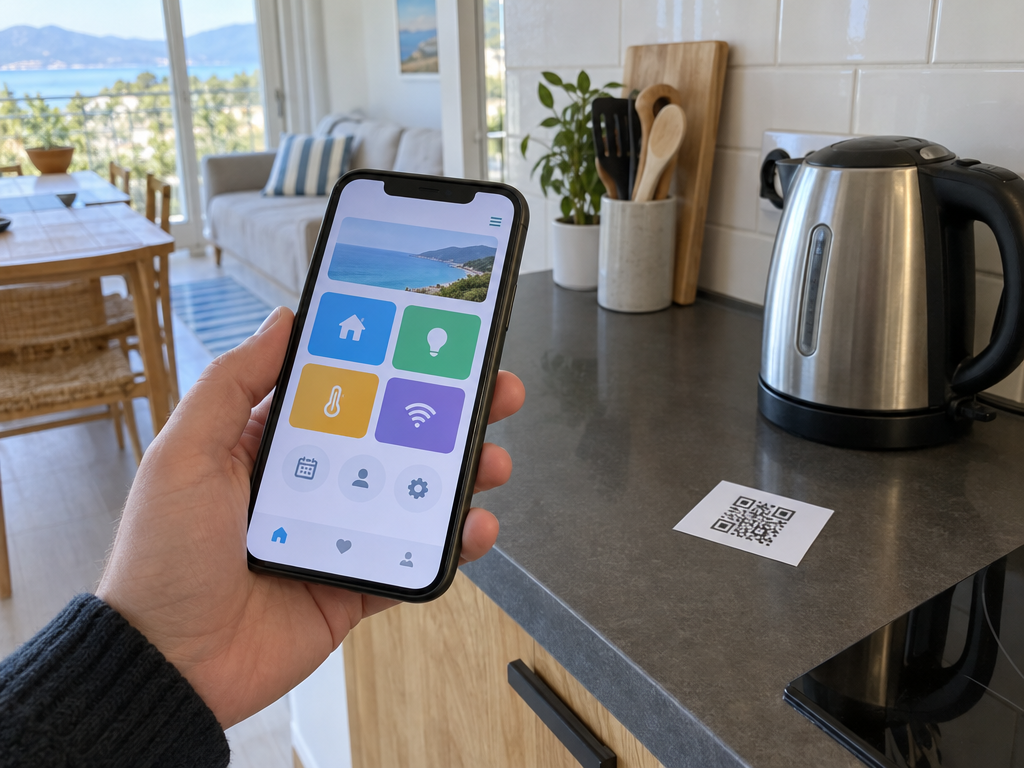
The simplest option is a PDF: write the outline, save it and send it with the booking confirmation. A free digital welcome book can also be a simple web page, such as an unlinked subpage of your own website that guests open via a QR code in the apartment. That way you can create the digital welcome book yourself and change it at any time.
App or web page
A digital welcome book app is mainly worthwhile if you have several apartments, because content is managed centrally and translated into different languages. For a single apartment, a subscription is usually overkill. When choosing a provider, make sure guests do not have to install an app; a link that opens in the browser is more convenient for most people.
Hotel, holiday home and holiday apartment
In hotels, digital guest directories are often linked to room bookings, menus or spa appointments. A digital welcome book for a holiday home or holiday apartment needs less: information, instructions, tips. Above all, a digital welcome book for a holiday rental should load quickly and work even with a weak signal.
Our advice: send the digital version before arrival and leave a short printed page with the Wi-Fi details, emergency numbers and check-out in the apartment. That is enough for most guests.
Offering guest information in several languages
Munich has many international guests, during trade fairs and in summer as well as in autumn. A welcome book only in German is of little help to many of them. English should be included as a minimum, and if you have many guests from Italy, France or the Arab world, another language is worthwhile.
Translate the first page and the emergency numbers first, then appliances and check-out. For restaurant tips, the original name is often enough. Have machine translations checked by someone who speaks the language, especially for instructions on the heating or hob.
Business travellers need different information from families. If you offer accommodation for Messe Munich, add directions to the trade fair: the exhibition centre is in Riem, and the U2 runs to the Messestadt West and Messestadt Ost stations. Families are more interested in playgrounds and paediatricians.
Creating a welcome book: practical tips
If you want to create a welcome book for your holiday rental, start with the questions guests actually ask. Collect every message guests send you for a few weeks. Anything that comes up three times belongs on the first page.
- Keep it short: one piece of information per sentence, number the steps.
- Photos instead of explanations: a picture of the fuse box or the bins replaces a paragraph.
- Be specific: “9 minutes on foot” rather than “very close by”.
- Check regularly: closed restaurants, new opening hours, a changed Wi-Fi password.
- Be honest: better to mention building-site noise or a missing lift than to keep quiet about it.
When creating a welcome book, it helps to set a fixed review date, for example twice a year. If you have several apartments, keep a shared section plus a separate section for each apartment covering appliances and access. If you host tradespeople on short stays, for example as workers’ accommodation in Munich, condense the welcome book onto a single page: access, Wi-Fi, parking, washing machine, contact person.
What does not belong in the welcome book
Long lists of prohibitions come across as unfriendly and belong in the house rules. Nor should it contain other people’s private details, such as neighbours’ mobile numbers without their consent. And any advertising for third parties from which the host earns commission should be labelled as such.
Data protection for digital welcome books
A printed welcome book generally contains no guest data and raises no data protection issues. A digital version is different as soon as it runs as a website or app. The usual obligations for websites then apply, such as a legal notice (Impressum) and privacy policy, and tracking or cookies may require consent depending on how they are used.
The simplest option is a welcome book that does not collect any guest data. If you include forms for requests or reviews, only ask for what you need, and conclude a data processing agreement with any external providers. This is general information, not legal advice.
Example: welcome book for a holiday rental in Lehel
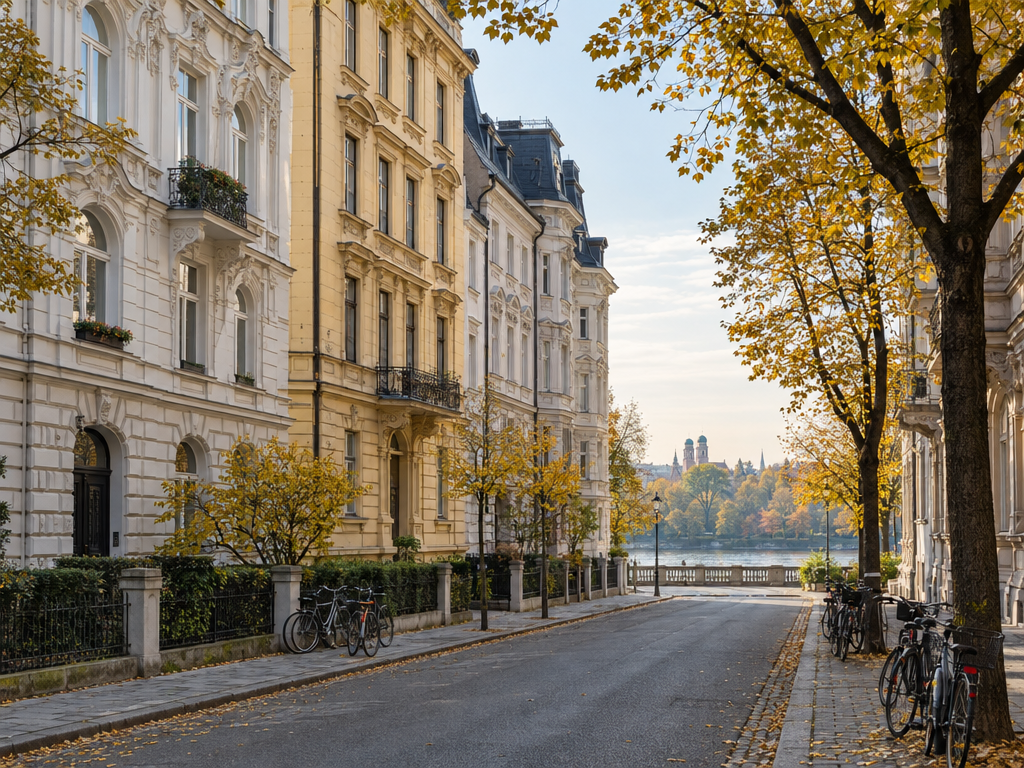
Lehel, the neighbourhood around our future building on Ländstraße, shows how specific the local area page of a welcome book can be. The following details are approximate values from Ländstraße, as of October 2026. Building details such as access or appliances depend on the individual apartment and are therefore not included in this example.
| Category | Example for Lehel |
|---|---|
| Public transport | Lehel U-Bahn (U4, U5) and Isartor S-Bahn a few minutes’ walk away |
| Old town | Isartor 4 min, Hofbräuhaus 7 min, Marienplatz 12 min on foot |
| Market | Viktualienmarkt 9 min on foot, closed on Sundays |
| Walks | Isar riverbank right in the neighbourhood, English Garden in under 20 min |
| Museum | Deutsches Museum 12 min on foot |
| Evenings | Maximilianstraße 5 min, traditional inns in the old town |
Each category deserves one sentence that makes the decision easier. For the Viktualienmarkt, for example: go in the morning, as it is packed on Saturdays. For the English Garden: it is around 18 minutes to the Eisbach and its river surfers. Tips like these are what set a welcome book apart from a list copied off the internet.
In eight years with serviced apartments, Daniel Schulz has looked after more than 80,000 guest stays. His experience: the more clearly arrival, Wi-Fi and check-out are described, the less often the phone rings in the evening. The local tips are what guests remember afterwards.
Conclusion
A good welcome book for a holiday rental is short, up to date and specific: the most important details are on the first page, the digital version is sent before arrival, a printed page with Wi-Fi, emergency numbers and check-out is left in the apartment, and if you host guests for months, for example offering temporary housing in Munich, you add notes on address registration, post and the laundry room.
Frequently asked questions about holiday rental welcome books
What should a holiday rental welcome book include?
A welcome book should include a welcome, arrival and check-in, Wi-Fi access, appliance instructions, waste separation, emergency numbers, information on doctors and pharmacies, public transport and parking, shopping, restaurant tips and the check-out procedure. The house rules are better kept in a separate, short document that the welcome book refers to.
Is a digital welcome book better than a printed one?
A digital welcome book is quicker to update, and guests can read it before they arrive. A printed one works without a phone or battery and is often preferred by older guests. Many hosts combine both: digital as a link or PDF before arrival, and a short printed version with the key points in the apartment.
Where can I find a free welcome book template?
You can create a simple template yourself: the outline in this article can be copied into Word or another word processor and saved as a PDF. What matters is not the layout, but that every section is filled with the real details of your apartment.
Can I make a digital welcome book myself?
Yes. The simplest digital welcome book is a PDF that you send with the booking confirmation. Slightly more convenient is a simple web page without tracking, which guests open via a QR code in the apartment. A single holiday apartment usually does not need an app.
Which emergency numbers belong in the welcome book?
At a minimum, 112 for the fire brigade and ambulance, 110 for the police and 116117 for the out-of-hours medical service. Add the phone number of the host or a stand-in, a note on how guests can find the nearest emergency pharmacy, and the exact address of the apartment.
Which languages should the welcome book be in?
At least German and English. If you have many guests from a particular country, add their language too. This is easier with a digital welcome book, because guests can choose the right language themselves.
How long should a welcome book be?
As short as possible. The most important details such as Wi-Fi, check-out and emergency numbers should be on the first page. For a small holiday apartment, six to ten pages are usually enough, and short steps rather than full manuals are sufficient for appliance instructions.

Daniel Schulz · Managing Director of residir GmbH
He has eight years’ experience letting and managing serviced apartments and has looked after more than 80,000 guest stays. More about Daniel Schulz