
By Daniel Schulz, residir GmbH · Last updated: 14 October 2026
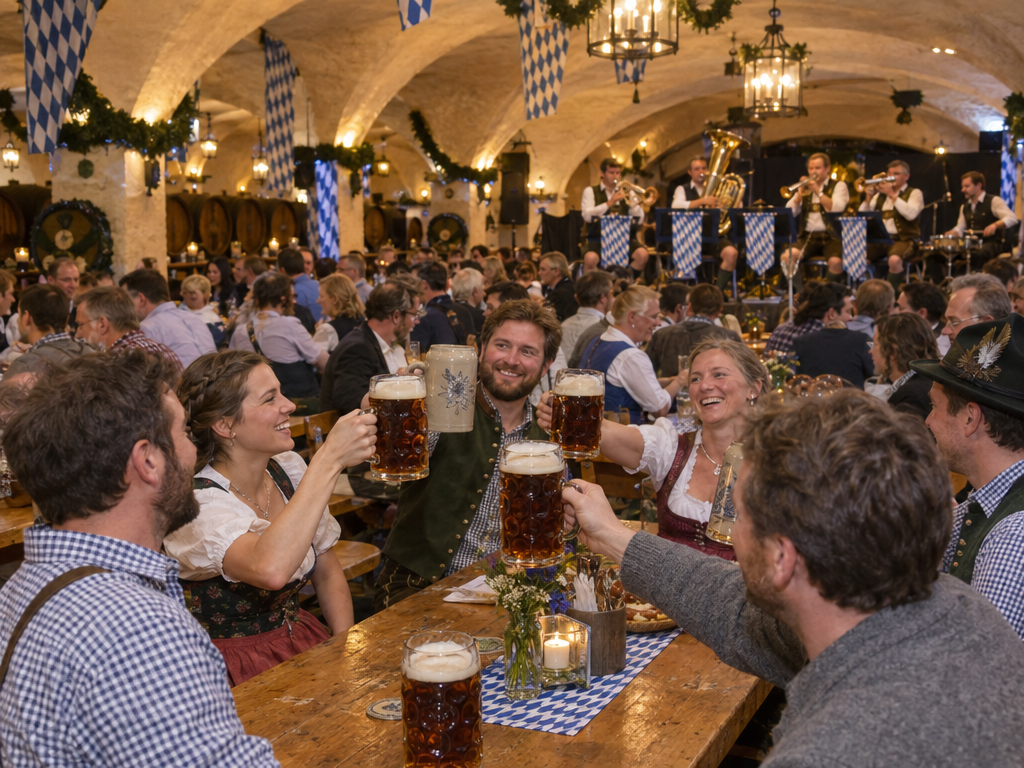
Starkbierfest Munich is the city’s “fifth season”: during Lent, from mid-February until just before Easter, beer cellars and festival halls pour dark, potent Starkbier (strong beer). The best-known festival takes place at Paulaner am Nockherberg in the Au district, in 2027 from 26 February to 21 March according to the organiser. There are also festivals at the Löwenbräukeller, the Augustiner-Keller, Giesinger Bräu and the Hofbräukeller.
If you spend a week in Munich in March, you will almost automatically catch strong beer season. From Lehel, the Nockherberg lies on the other side of the Isar, just under half an hour’s walk away. We have pulled together when and where the festivals take place, how to get a seat and why a litre of Starkbier hits differently from a litre of Helles. Dates and prices come from the organisers, muenchen.de and Munich Tourism, as of October 2026.
In this article:
- Strong beer festivals 2027 at a glance
- What is Starkbier? History and Salvator
- Strong beer season 2027 and Lent
- Paulaner am Nockherberg
- Derblecken and the Singspiel
- Löwenbräukeller, Augustiner and other festivals
- Strong beer ABV and brands
- Tips for your evening
- Getting there from Lehel
- Starkbierfest, Spring Festival or Oktoberfest?
- Conclusion
- Frequently asked questions
Starkbierfest Munich 2027: the festivals at a glance
There is no single Starkbierfest in Munich. The term covers several festivals run by the big breweries, spread across the weeks of Lent. So far two venues have published their dates for 2027; the others usually announce theirs over the winter.
| Festival | Venue | Dates 2027 | Beer |
|---|---|---|---|
| Paulaner am Nockherberg | Hochstraße 77, Au | 26 Feb to 21 Mar 2027 | Salvator |
| Löwenbräukeller | Nymphenburger Str. 2, Stiglmaierplatz | 12 Feb to 20 Mar 2027, Thu–Sat | Triumphator |
| Augustiner-Keller | Arnulfstraße 52, near the Hauptbahnhof | to be confirmed (2026: Thu–Sat, late Feb to late March) | Maximator |
| Giesinger Bräu, Werk 2 | Detmoldstraße 40, Milbertshofen | to be confirmed (2026: 19 Feb to 15 Mar) | Giesinger Doppelbock |
| Hofbräukeller | Innere Wiener Straße 19, Haidhausen | to be confirmed (2026: two evenings in late February) | Delicator |
Only the rough framework is fixed: strong beer season is tied to Lent and therefore to the date of Easter. Because Easter 2027 falls as early as 28 March, the season moves forward slightly. Around Josefi on 19 March, most venues will be open at the same time in 2027.
What is Starkbier? Lenten beer, Salvator and the Paulaner monks
So what exactly is Starkbier? It is a beer with a high original gravity, meaning lots of dissolved malt before fermentation. This produces more alcohol and a fuller, often sweetish taste. In Munich it almost always means a dark or amber Doppelbock.
The story leads to Einbeck in Lower Saxony. According to Munich Tourism, the Munich court imported the strong Einbeck beer in the 16th century and later poached the Einbeck brewmaster for the Hofbräuhaus. In the Munich dialect, “Ainpöckisch Bier” became Bockbier.
The monks’ Lenten beer
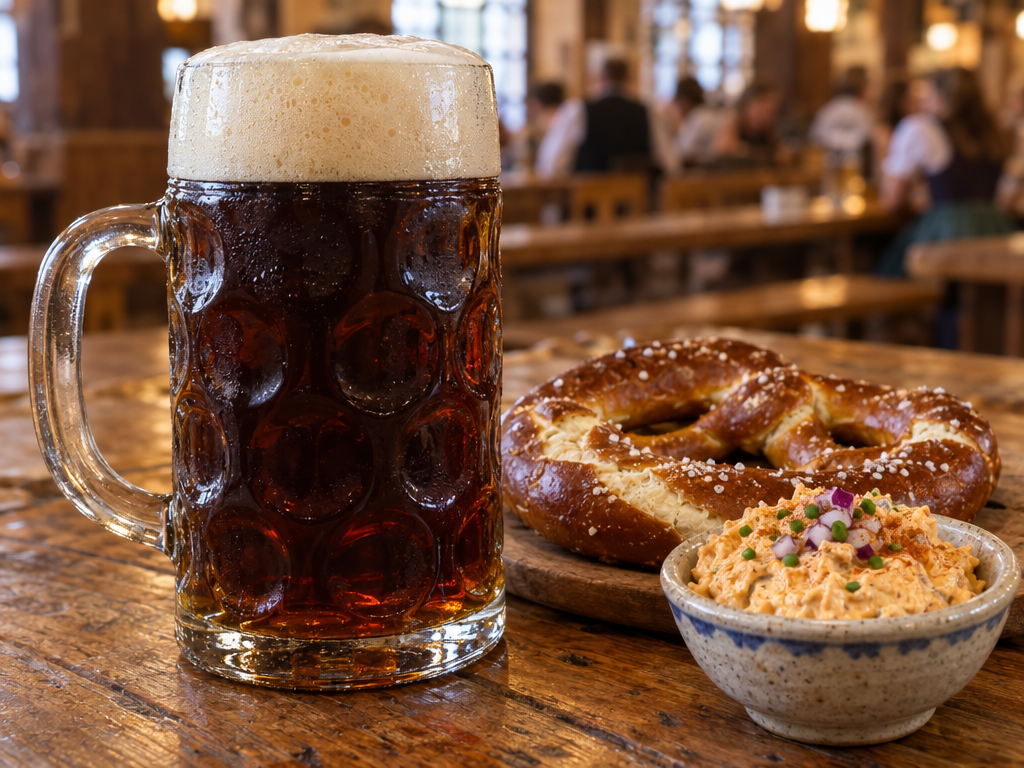
Drinking beer during Lent sounds contradictory at first. The Paulaner monks at Neudeck ob der Au monastery largely had to go without solid food during Lent. Liquids were allowed, so, according to Munich Tourism, from 1651 they brewed a nourishing Lenten beer every spring in honour of their order’s founder. The beer was initially called “Sankt-Vater-Bier” (Holy Father beer), which became Salvator.
A well-known anecdote tells that the monks sent a barrel to the Pope. On the long journey over the Alps the beer turned sour, and the Pope approved it as a fitting penance for Lent. There is no proof of this, but in Munich the tale is retold with every new Lenten beer.
Salvator: the first strong beer from the Nockherberg
Since the 18th century, the Bavarian Elector received the first litre when the Salvator beer was tapped; today it is the Minister-President. Paulaner itself cites 1634 as the first documented mention of the brewery. Paulaner Salvator is now available in bottles all year round, but it tastes best fresh from the barrel in March. The fact that the name “Bock” is so closely tied to the Hofbräuhaus in Munich shows just how old Munich’s strong beer tradition is.
Strong beer season 2027: dates around Lent and Josefi
Strong beer season traditionally begins after Fasching (carnival) and ends before Easter. In 2027 Ash Wednesday falls on 10 February and Easter Sunday on 28 March. The Starkbierfest 2027 is therefore spread across the weeks between mid-February and 21 March.
- From 12 February 2027: Starkbierfest at the Löwenbräukeller, Thursdays to Saturdays.
- 26 February 2027: season opens at the Nockherberg 2027, shortly preceded by the Salvatorprobe with Derblecken (date to be confirmed).
- 19 March 2027: Josefi, the name day of St Joseph and, for many locals, the highlight of the season.
- 20 and 21 March 2027: final evenings at the Löwenbräukeller and the Nockherberg.
Augustiner, Giesinger Bräu and the Hofbräukeller have not yet announced dates for the Starkbierfest Munich 2027. Expect evenings from late February and throughout March; check the official dates on the venues’ websites over the winter. Almost everywhere the Starkbieranstich (first tapping) is celebrated with brass music and the first barrel, often on the eve of the season.
For your stay this means late February to mid-March is the busiest period. The Bavarian Easter holidays do not start until 22 March, so the city is less crowded in March than at Easter or in summer. Central accommodation in Munich is usually easier to find in these weeks than during the big festivals in autumn.
Paulaner am Nockherberg: the Starkbierfest in the Au
Paulaner am Nockherberg is the spiritual home of strong beer. The inn and its festival hall stand at Hochstraße 77 on the high bank of the Isar in the Au district, not far from Mariahilfplatz. The Starkbierfest at the Nockherberg is the best known in the city, and this is where the season is opened every year.
Outside strong beer season, the Nockherberg in Munich is an inn like many others, with a beer garden in summer. The Nockherberg beer garden is right next to the inn and opens in good weather, though usually not yet in March.
Nockherberg tickets and reservations
At the Paulaner Starkbierfest, you will hardly get a seat in the evening without a reservation. According to Paulaner, advance sales for 2027 began on 19 September 2026. Reservations are by the table only, and a table seats up to ten people. The table package costs 225 euros and includes admission for ten people plus drink and food vouchers (as of October 2026).
Individual Nockherberg tickets are valid for one day and include a voucher; admission and voucher redemption are possible until 9 pm. You must take reserved seats within 20 minutes of the reservation start, otherwise they are given away. According to the organiser, free cancellation is only possible until 12 February, and admission is generally from age 16.
If you are on your own or a couple, a whole table is rarely worth it. Ask about individual tickets instead, or come early on a weekday evening when seats are still free. The current terms are on paulaner-nockherberg.com.
Stay in March, walk to the Nockherberg
From autumn 2027 we will be letting our holiday apartments in Munich at Ländstraße 6 in Lehel: 54 apartments of 25 to 50 m², each with its own kitchen. After a long evening in the beer cellar you can get in at any time thanks to 24-hour check-in via the key safe, and the outdoor sauna awaits the next day. We are already taking enquiries for strong beer season 2028.
Derblecken at the Nockherberg: Salvatorprobe, Lenten sermon and Singspiel
Before the season opens, the Nockherberg hosts the Salvatorprobe, known as Derblecken. In Bavarian, “derblecken” roughly means to mock someone good-naturedly in public. A cabaret artist delivers a speech as the Lenten preacher, in which the state and federal politicians in the hall get a good roasting.
According to muenchen.de, the Munich folk singer Jakob Geis made Derblecken a fixed tradition in 1891. Since 2026 the Lenten speech has been given by Stephan Zinner, who previously played Markus Söder in the Singspiel for many years. The city has not yet named a date for 2027; in 2026 the Salvatorprobe was on 4 March.
The Nockherberg Singspiel on television
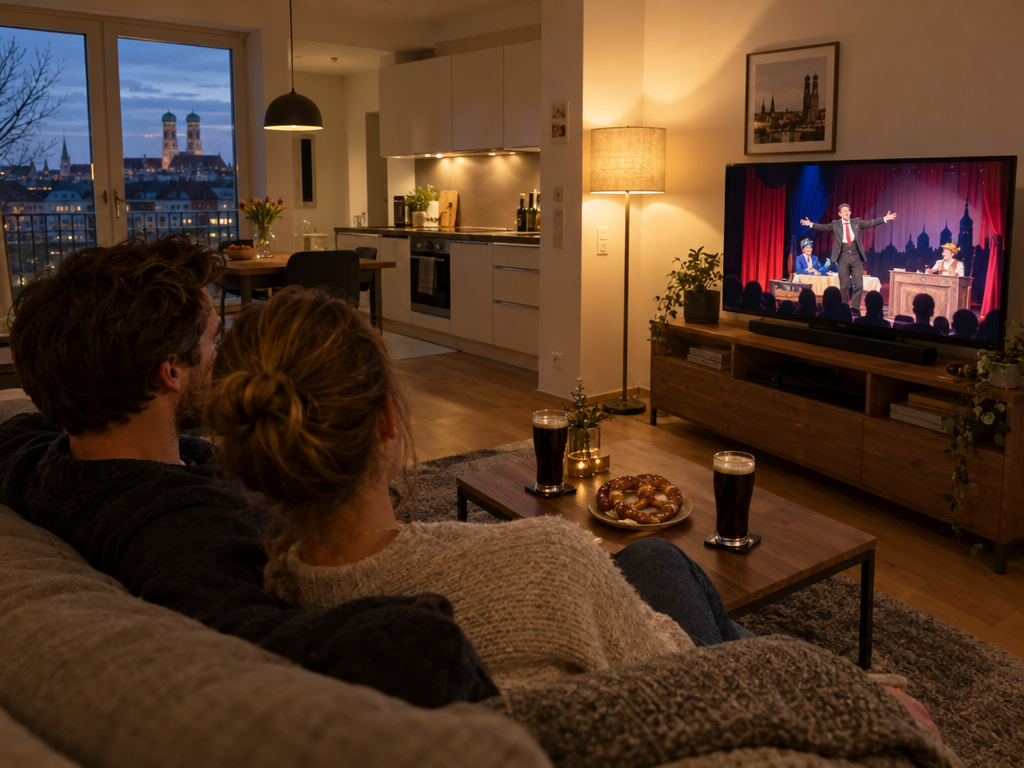
The speech is followed by the Nockherberg Singspiel, a satirical musical in which actors appear as politicians’ doubles. The event is by invitation only. The best way to watch the Derblecken at the Nockherberg is therefore on TV: Bayerisches Fernsehen broadcasts it live, and afterwards it is available in its online media library.
A tip for guests: watch the broadcast in the evening in your holiday apartment and go to the Starkbierfest yourself in the following days. Many locals talk about nothing else that week, and you will understand the jokes in the inn much better.
Löwenbräukeller, Augustiner-Keller and other strong beer festivals
Starkbierfest at the Löwenbräukeller
The Löwenbräu Starkbierfest takes place in the festival hall of the Löwenbräukeller on Stiglmaierplatz. According to the organiser, in 2027 it runs from 12 February to 20 March, Thursdays to Saturdays from 6 pm. The beer served is Triumphator, a dark Doppelbock.
If you reserve for the Starkbierfest at the Löwenbräukeller, the website says you book a menu with every seat: admission and booking fee cost 5 euros per person, and the menus range from 9 euros for a Brotzeit (cold snack) board to 51 euros (as of October 2026). Reservations lapse 30 minutes after the start. The music and food are reminiscent of an Oktoberfest tent in miniature.
Augustiner-Keller Starkbierfest
The Augustiner Starkbierfest is held in the large festival hall and the Alter Lagerkeller (old storage cellar) of the Augustiner-Keller on Arnulfstraße, a few minutes’ walk from the Hauptbahnhof. In 2026 it was open Thursdays to Saturdays, and tickets cost 10 euros according to in-muenchen.de. Augustiner’s strong beer is called Maximator; the dates for the Augustiner-Keller Starkbierfest 2027 are still to be announced.
Giesinger Starkbierfest
The Giesinger Starkbierfest no longer takes place at the brewery’s original home in Giesing but at its Werk 2 in Milbertshofen. In 2026 it ran from 19 February to 15 March with around 1,000 seats and a dark Doppelbock. If you want to visit the Giesinger Bräu Starkbierfest, allow for the longer journey to the north of Munich.
Hofbräukeller and the Hofbräuhaus Maibock
The Hofbräukeller in Haidhausen held its third Starkbierfest in 2026 on two evenings in late February, with Delicator on tap. The Hofbräuhaus itself has no Starkbierfest of its own. Instead, the Maibock is tapped there in spring, a pale strong beer that carries strong beer season on after Easter.
Around 600 invited guests attend the Maibock tapping in the festival hall; there is Derblecken here too, and Bayerisches Fernsehen broadcasts it. The Hofbräuhaus then serves its Maibock seasonally, with the current menu on hofbraeuhaus.de. For guests arriving in April, the Maibock is a good chance to try a strong beer after all.
Strong beer ABV: alcohol content and strong beer brands
How strong is Starkbier? According to Munich Tourism, a Doppelbock has at least 18 per cent original gravity and around 7.5 per cent alcohol, compared with about 5 per cent for a normal Helles. The alcohol content varies by brewery: the organiser gives Hofbräu Delicator as 8.4 per cent and Hofbräu Maibock as around 7.2 per cent.
The brewery does not list a figure for Paulaner Salvator on its website; if you want to know the exact Salvator ABV, check the label. As a rough rule, a litre of Salvator Doppelbock has about the same effect as one and a half litres of Helles.
Strong beer brands of Munich’s breweries
Munich’s strong beer brands typically end in “-ator”, a nod to the Salvator:
- Salvator: Paulaner, the original from the Nockherberg.
- Maximator: Augustiner.
- Triumphator: Löwenbräu.
- Optimator: Spaten.
- Animator: Hacker-Pschorr.
- Delicator: Hofbräu, at the Hofbräukeller.
- Celebrator: Ayinger, from Aying south-east of Munich.
Paulaner’s strong beer is also sold as a Lenten beer in many drinks shops. If you would like a tasting in your holiday apartment, line up two or three Doppelbocks side by side and compare. The difference between a dark Salvator and a pale Maibock is clearer than many people expect.
Tips for your evening: steins, snacks and getting home
Strong beer goes down easily and takes effect later than you think. The key tips for an evening in a beer cellar:
- Half-litre instead of a Maß: many venues also serve a Halbe (half-litre). Ask for one if you want to try several beers.
- Eat first: a pretzel, Obatzda or roast pork slows the alcohol down. On an empty stomach, the first litre is quickly too much.
- Water in between: a glass of water after every half-litre makes a noticeable difference.
- Cash and vouchers: many festivals work with vouchers that you buy in advance or at the entrance.
- No car: use an MVV day ticket or walk. After strong beer, driving is not an option.
Tracht (traditional dress) is common at the strong beer festivals but not compulsory. Evenings in March are cold, so bring a jacket for the way home. The halls, on the other hand, are warm and loud; if you have sensitive ears, sit well away from the stage.
If you are in Munich on business in March, it is easy to combine a meeting with an evening in a beer cellar. For projects lasting several weeks, our serviced apartments in Munich with their own kitchen and an in-house washing machine are more practical than a hotel room.
If you prefer sitting outdoors, come back in May for the gardens. The beer cellars open their gardens from spring; an overview with the rules on bringing your own food is in our guide to Munich beer gardens. In March it is festival halls and vaulted cellars only.
Getting to the Nockherberg from Lehel
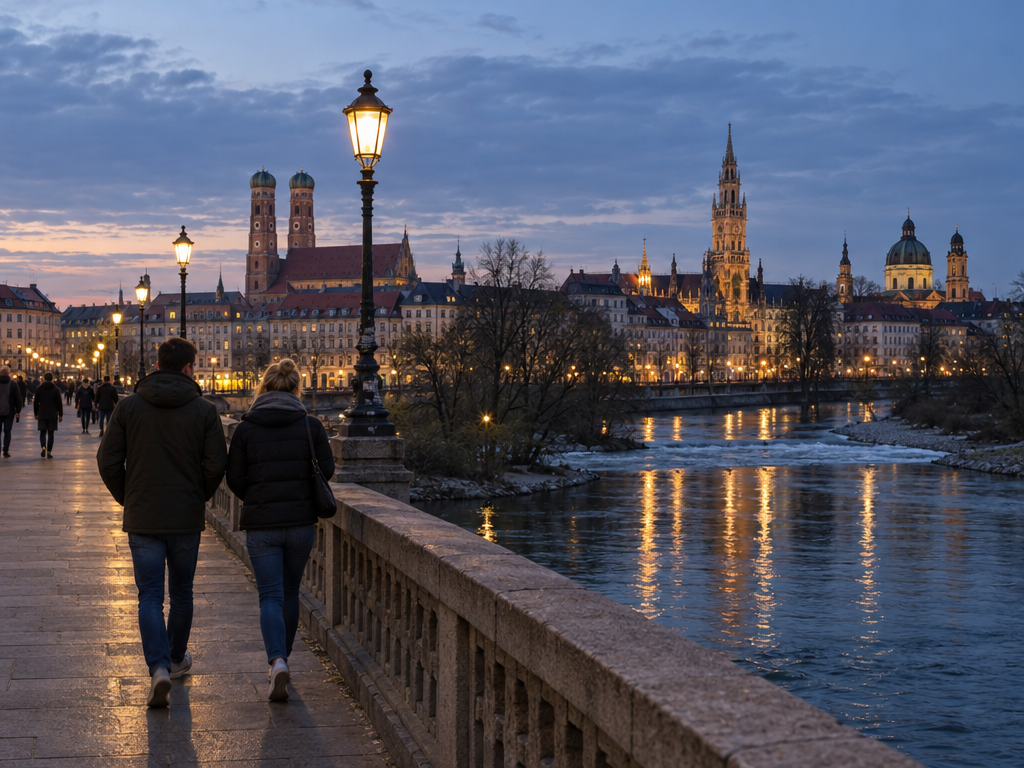
You do not need a car to get to the Nockherberg from Lehel. On foot, walk from Ländstraße along the Isar to the Ludwigsbrücke, across the Museumsinsel past the Deutsches Museum and then through the Au up the slope to Hochstraße 77. That takes around 25 to 30 minutes (approximate), and the way back, downhill, is a little quicker.
According to Paulaner, trams 18, 15 and 25 and several bus lines stop nearby, and the U1, U2 and U7 as well as the S-Bahn can be reached at Rosenheimer Platz. The MVG journey planner shows the right connection from Isartor or Lehel. There is an underground car park at the venue, but it charges a fee and is not a good idea after strong beer.
For the other festivals, set off from Lehel or Isartor: to the Löwenbräukeller by U-Bahn to Stiglmaierplatz, to the Augustiner-Keller by S-Bahn to Hackerbrücke, and to the Hofbräukeller in Haidhausen it is around a 20-minute walk over the Maximiliansbrücke. For Giesinger Bräu in Milbertshofen, allow a good half-hour journey.
If your visit coincides with a trade fair week, the city gets busier in March. If you need accommodation for Messe Munich and still want a strong beer in the evening, Lehel is conveniently placed between the Altstadt, the Au and the S-Bahn to Riem.
Starkbierfest, Spring Festival or Oktoberfest: the differences
Many guests ask whether the Starkbierfest is worth it if they are coming for the Oktoberfest anyway. The answer: it is a completely different festival. Instead of tents and fairground rides on the Theresienwiese, you get beer cellars, brass bands and dark beer, and you share your table with more locals than at the Wiesn.
| Starkbierfest | Spring Festival | Oktoberfest | |
|---|---|---|---|
| When | February/March | April/May | September/October |
| Where | Beer cellars and festival halls | Theresienwiese | Theresienwiese |
| Beer | Doppelbock, around 7 to 8.5% | Festbier | Wiesn Festbier |
| Fairground rides | none | yes | yes |
| Admission | sometimes an entry fee or table package | free | free |
If you can come to Munich twice in spring, combine both: an evening at the Nockherberg in March and an afternoon at the Munich Spring Festival in April, which is expected to start on 16 April 2027. Oktoberfest 2027 starts on 18 September.
Conclusion
For the Starkbierfest 2027, book early at the Nockherberg or the Löwenbräukeller, check the other dates over the winter and stay within walking distance, for example in our boarding house in Munich in Lehel, which opens in autumn 2027.
Frequently asked questions about the Starkbierfest
When is the Starkbierfest 2027 in Munich?
Strong beer season 2027 begins in mid-February and runs until shortly before Easter. According to Paulaner, the Starkbierfest at the Nockherberg is planned from 26 February to 21 March 2027, and at the Löwenbräukeller from 12 February to 20 March 2027 (as of October 2026). Other venues usually only publish their dates over the winter.
Do you need tickets for the Starkbierfest at the Nockherberg?
If you want a guaranteed seat, yes. Paulaner sells tickets and tables for up to ten people online, and advance sales for 2027 began on 19 September 2026. According to Paulaner, a table package costs 225 euros for ten people, including admission and vouchers (as of October 2026).
How strong is Starkbier?
Starkbier usually has between 7 and 8.5 per cent alcohol, compared with around 5 per cent for a normal Helles. According to the organiser, Hofbräu Delicator comes in at 8.4 per cent and Hofbräu Maibock at around 7.2 per cent.
What is Derblecken at the Nockherberg?
Derblecken means poking fun at politicians publicly and with humour. At the Salvatorprobe at the Nockherberg, a cabaret artist gives the Lenten sermon, followed by the Singspiel with politicians’ doubles. The event is by invitation only, and Bayerisches Fernsehen broadcasts it live.
What is the difference between the Starkbierfest and the Oktoberfest?
The Starkbierfest takes place in March in beer cellars and festival halls, the Oktoberfest in autumn in tents on the Theresienwiese. At the Starkbierfest there are no fairground rides, but there is stronger beer, smaller halls and plenty of brass music.
How do I get from Lehel to the Nockherberg?
On foot, it is around 25 to 30 minutes from Ländstraße over the Ludwigsbrücke and through the Au to Hochstraße 77 (approximate). Alternatively, trams and buses run nearby; the MVG journey planner shows the right connection.
Why do strong beers often end in -ator?
The model is the Salvator of the Paulaner monks. Other Munich breweries also added the ending -ator to their Doppelbocks, such as Maximator from Augustiner, Triumphator from Löwenbräu and Optimator from Spaten.

Daniel Schulz · Managing Director of residir GmbH
He has eight years of experience in letting and managing serviced apartments and has looked after more than 80,000 guest stays. More about Daniel Schulz