
By Daniel Schulz, residir GmbH · Last updated: 13 October 2026
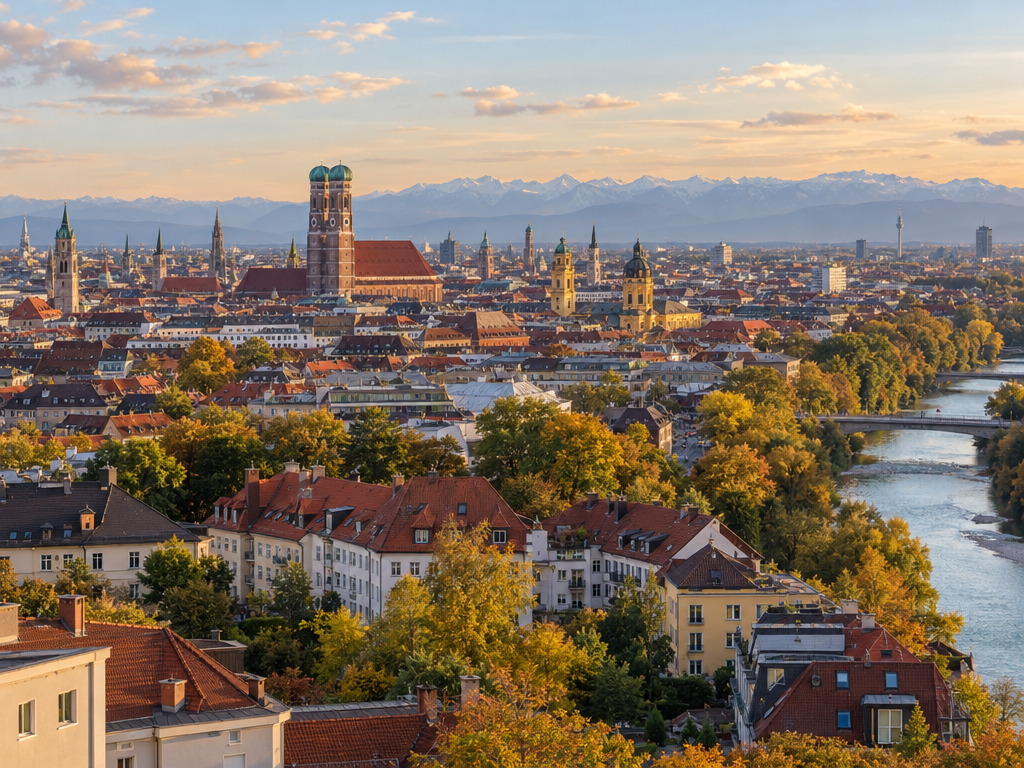
Officially, Munich is divided into 25 districts (Stadtbezirke), but in everyday life locals talk about far more neighbourhoods and quarters. For a visit, the most practical Munich neighbourhoods are the Altstadt (old town), Lehel, Maxvorstadt, Haidhausen and the Glockenbachviertel, because almost everything is within walking distance. If you are staying longer or moving here, Schwabing, Neuhausen, Sendling and Giesing offer quieter residential areas with good U-Bahn (underground) connections.
We run a boarding house with 54 apartments at Ländstraße 6 in Lehel, opening in autumn 2027. The question people ask us most often is not about price but: “Is it in a good location?” That is why this guide describes Munich’s neighbourhoods the way we would explain them to our guests, with journey times from Lehel and an honest word on what is noisy and what is quiet. If you are only staying a few days, holiday apartments in Munich city centre usually keep your journeys shortest.
In this article:
- Munich neighbourhoods compared
- How many districts does Munich have?
- City centre: Altstadt-Lehel and Maxvorstadt
- Schwabing and Bogenhausen
- Haidhausen and the Au
- Glockenbachviertel and Isarvorstadt
- Neuhausen, Westend and Sendling
- Giesing
- Messestadt Riem and Freimann
- Best neighbourhoods for your stay
- How expensive and how safe?
- Conclusion
- Frequently asked questions
Munich neighbourhoods compared: which area suits whom
The table gives you the neighbourhoods in this guide at a glance. Journey times are rough guides from our front door on Ländstraße, including the walk to the stop but not waiting time. If you are coming with a work crew and looking for workers’ accommodation in Munich, you can quickly see how far it is from the centre to building sites and job locations in each area.
| Neighbourhood | Best for | Journey time from Lehel (approx.) |
|---|---|---|
| Altstadt | Sightseeing, short city breaks | 10–15 min on foot |
| Lehel | Quiet base between the old town and the Isar | This is where our building is |
| Maxvorstadt | Museums, university, cafés | approx. 15 min by U-Bahn |
| Schwabing | English Garden, nightlife, families | approx. 20 min by U-Bahn |
| Bogenhausen | Quiet, upmarket living | approx. 10 min on the U4 |
| Haidhausen | Period buildings, restaurants, short distances | 15–20 min on foot |
| Au | Close to the Isar, Auer Dult | approx. 20 min on foot |
| Glockenbach / Isarvorstadt | Bars, nightlife, Gärtnerplatz | approx. 20 min on foot |
| Neuhausen / Nymphenburg | Families, palace, Hirschgarten | approx. 25 min by U-Bahn |
| Westend | Near the Theresienwiese, down-to-earth | approx. 15 min by U-Bahn |
| Sendling | Residential with everyday amenities | approx. 20 min by S-Bahn and U-Bahn |
| Giesing | Football, the Isar, everyday life | approx. 15–20 min by S-Bahn or bus |
| Messestadt Riem | Trade fair, Riemer Park | 25–30 min by U-Bahn |
| Freimann / Fröttmaning | Allianz Arena, northern English Garden | 25–30 min by U-Bahn |
How many districts does Munich have? The 25 Stadtbezirke
Officially, Munich has 25 districts (Stadtbezirke), each with its own district committee. That is how the Statistical Office and the city’s official portal describe it (as of October 2026). The districts are in turn divided into sub-districts and quarters. Many of the names locals use every day do not appear on the official list at all: Lehel is part of the Altstadt-Lehel district, and the Glockenbachviertel belongs to Ludwigsvorstadt-Isarvorstadt.
The districts of Munich in the official order of their district numbers:
- Altstadt-Lehel
- Ludwigsvorstadt-Isarvorstadt
- Maxvorstadt
- Schwabing-West
- Au-Haidhausen
- Sendling
- Sendling-Westpark
- Schwanthalerhöhe
- Neuhausen-Nymphenburg
- Moosach
- Milbertshofen-Am Hart
- Schwabing-Freimann
- Bogenhausen
- Berg am Laim
- Trudering-Riem
- Ramersdorf-Perlach
- Obergiesing-Fasangarten
- Untergiesing-Harlaching
- Thalkirchen-Obersendling-Forstenried-Fürstenried-Solln
- Hadern
- Pasing-Obermenzing
- Aubing-Lochhausen-Langwied
- Allach-Untermenzing
- Feldmoching-Hasenbergl
- Laim
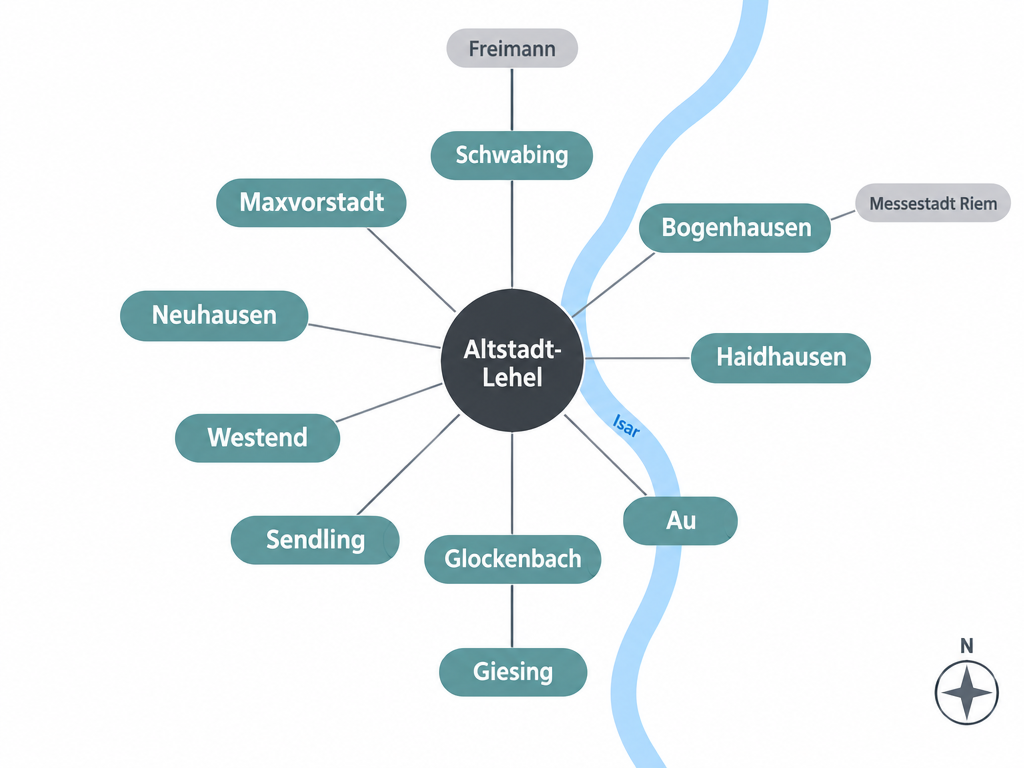
Looking for a map of Munich’s districts with street names? The Statistical Office offers an overview map at a scale of 1:40,000 on stadt.muenchen.de, which also shows the sub-districts. For finding your way around as a visitor, our sketch below is enough. It simply shows roughly where the neighbourhoods in this article are.
Munich’s city centre neighbourhoods: Altstadt-Lehel and Maxvorstadt
Altstadt-Lehel: District 1
The Altstadt is the area inside the Altstadtring (the old town ring road), home to Marienplatz, the Frauenkirche, the Viktualienmarkt and the Residenz. Historically it was split into four quarters: Kreuzviertel, Hackenviertel, Angerviertel and Graggenau. During the day it is busy and loud, but in the evening the side streets become surprisingly quiet. Flats are scarce and expensive, whereas hotels are plentiful.
East of the ring road lies Lehel, our neighbourhood. It is a quiet residential area with late 19th-century buildings, St Anna’s Church and short walks to the Isar and the English Garden. The U4 and U5 stop at Lehel station, the S-Bahn at Isartor. For more on its history, cafés and a stroll through its streets, see our guide to Lehel, Munich.
Maxvorstadt: the university quarter
Maxvorstadt lies north-west of the old town and is Munich’s university quarter. It is home to Ludwig Maximilian University and the Technical University, plus the Kunstareal (art district) with the Alte Pinakothek, the Pinakothek der Moderne, Museum Brandhorst and the Lenbachhaus. Around Amalienstraße and Türkenstraße you will find lots of small cafés, bookshops and pubs with student prices.
For visitors, Maxvorstadt is extremely convenient: central, packed with culture and well connected, with the U3 and U6 at Universität and the U2 at Königsplatz. It is not entirely quiet, though. Ludwigstraße and the main roads carry traffic, and the pub streets stay lively late at weekends. It is a sought-after place to live, and vacant flats go quickly. How to find a flatshare in Munich is covered in a separate guide.
Stay longer and get to know the neighbourhoods at your own pace
If you are moving to Munich, it is better to choose a neighbourhood only after a few weeks on the ground. Our 54 apartments on Ländstraße in Lehel each have their own kitchen and fast Wi-Fi, there are washing machines in the building, and the U-Bahn and S-Bahn are just a few minutes’ walk away. We open in autumn 2027; details on stay lengths and amenities can be found on our page about furnished apartments in Munich.
Schwabing and Bogenhausen: the north and north-east
Schwabing and Schwabing-West
Schwabing is the best-known name among Munich’s neighbourhoods. Around 1900 it was the quarter of artists and writers; today it is above all a popular residential area with plenty of period buildings. Leopoldstraße with Münchner Freiheit is the main artery, and the English Garden borders it to the east. Leopoldstraße is lively in the evenings, while families live in the side streets.
Schwabing-West, around Elisabethplatz and its Elisabethmarkt, is a little quieter and less touristy. The U3 and U6 take you from Münchner Freiheit to the city centre in a few minutes, and the U2 serves the western part. To be honest, nothing here is cheap any more: Schwabing has been one of the city’s expensive areas for years.
Bogenhausen
Bogenhausen lies on the other side of the Isar, north-east of Lehel. Around the Friedensengel (Angel of Peace), Prinzregentenstraße and Herzogpark you will find villas and large period flats, and the area is regarded as one of Munich’s wealthiest neighbourhoods. Thomas Mann had a villa built in Herzogpark, and the Villa Stuck on Prinzregentenstraße is now a museum.
For guests, Bogenhausen is more peaceful than exciting. There are restaurants, but hardly any nightlife. From Lehel, the U4 takes you one stop to Max-Weber-Platz or two to Prinzregentenplatz; walking to the Friedensengel across the Isar bridges takes us a good 20 minutes. Further east, around Arabellapark, it becomes more modern, with office blocks and hotels.
Haidhausen and the Au: neighbourhoods east of the Isar
Haidhausen and the French Quarter
For many locals, Haidhausen is the most beautiful neighbourhood in the city, and we can see why. Between Wiener Platz, Max-Weber-Platz and Ostbahnhof there are period buildings, small squares, traditional inns and plenty of restaurants. On foot, it takes 15 to 20 minutes to get there from Lehel via the Maximiliansbrücke.
Around Orleansplatz lies the Französisches Viertel (French Quarter), also known as the Franzosenviertel. Its streets are named after places from the Franco-Prussian War of 1870/71, such as Wörthstraße, Sedanstraße and Pariser Platz, and most of the buildings date from shortly afterwards. With the U4 and U5 at Max-Weber-Platz and the S-Bahn at Rosenheimer Platz and Ostbahnhof, Haidhausen is extremely well connected.
The Au
The Au lies south of Haidhausen, right on the Isar, and together they form the Au-Haidhausen district. Like Lehel, it was once a working-class quarter; in 1854 it was incorporated into the city together with Haidhausen and Giesing. Today it is a quiet residential area centred on Mariahilfplatz.
Three times a year, Mariahilfplatz hosts the Auer Dult, a market with crockery, bric-a-brac and fairground rides. In spring, the Starkbierfest (strong beer festival) is celebrated on the Nockherberg. From Lehel it is about a 20-minute walk to the Au via the Ludwigsbrücke; the U-Bahn stops at Kolumbusplatz and, on the other side of the Isar, at Fraunhoferstraße.
Glockenbachviertel and Isarvorstadt: bars, Gärtnerplatz and Schlachthof
The Glockenbachviertel is Munich’s hip neighbourhood. Together with the Gärtnerplatzviertel it forms part of the Isarvorstadt, which in turn makes up a district with the Ludwigsvorstadt. Around Gärtnerplatz, Fraunhoferstraße and Müllerstraße, bars, small clubs, restaurants and shops are packed closely together. For decades the area has also been the heart of the LGBTQ+ scene, and in June the parade for Munich Pride (CSD) passes through.
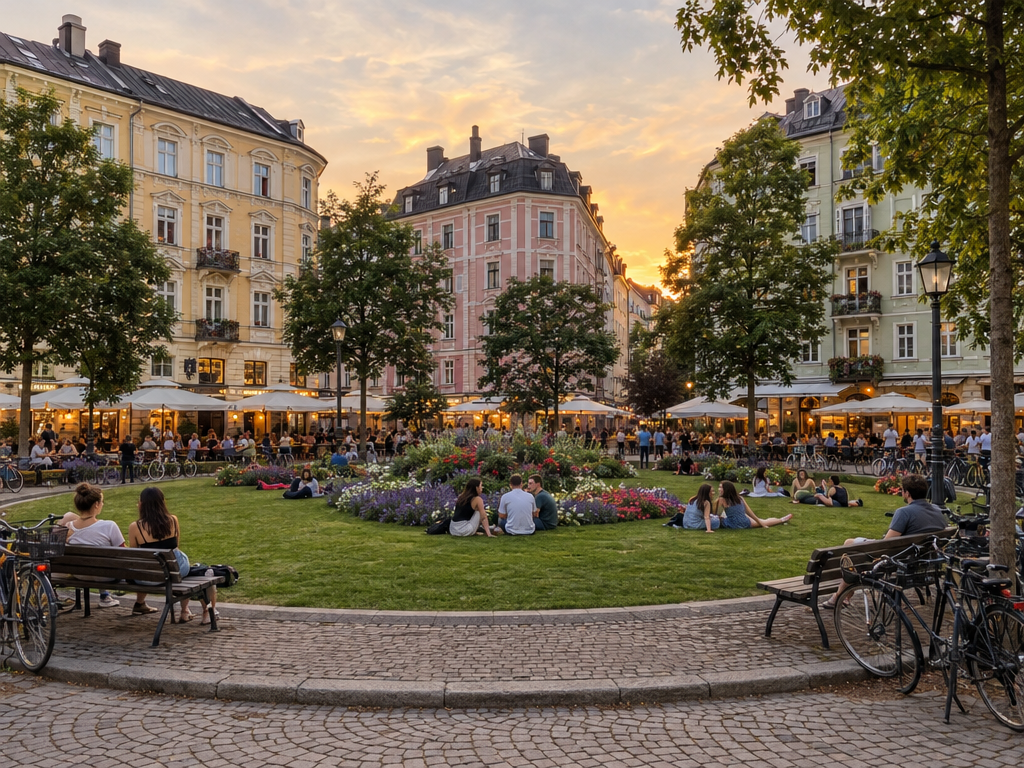
If you want to go out in the evening, this is the place to stay. If you want an early night, probably not: on summer evenings hundreds of people sit on Gärtnerplatz, and some streets stay busy until after midnight. From Lehel we walk there along the Isar in about 20 minutes, and the U1 and U2 stop at Fraunhoferstraße.
Further south, the Isarvorstadt becomes quieter. The Dreimühlenviertel is a residential area with lots of families; in the Schlachthofviertel the abattoir is still operating, and traditional inns, pubs and small stages have sprung up alongside it. If you are looking for an alternative neighbourhood in Munich, you are more likely to find it here than in Schwabing. To the west, the Ludwigsvorstadt with the Hauptbahnhof (central station) and the Theresienwiese belongs to the same district; our guide on getting from Munich airport to the city centre covers the station in detail.
Neuhausen, Westend and Sendling: neighbourhoods in western Munich
Neuhausen and Nymphenburg
Neuhausen begins west of Maxvorstadt and stretches as far as Nymphenburg. Around Rotkreuzplatz there are shops, cafés and weekly markets, and the area is very popular with families. The U1 gets you to the Hauptbahnhof in a few minutes; from Lehel it takes around 25 minutes with one change.
To the west, Nymphenburg adjoins it with Nymphenburg Palace and its vast park. Tram 17 runs right up to the palace. In between lies the Hirschgarten with plenty of green space. For a holiday, Neuhausen is a little far out, but for a longer stay with children it is very pleasant.
Westend (Schwanthalerhöhe)
The Westend’s official name is Schwanthalerhöhe, and it lies directly behind the Theresienwiese. It used to be a working-class area; today it is mixed: period buildings, new flats on the old trade fair site, the Augustiner brewery on Landsberger Straße and lots of small bars and restaurants. The U4 or U5 takes you from Lehel to Schwanthalerhöhe without changing.
A word of honesty: during the Oktoberfest the Westend is crowded and noisy, and accommodation is expensive. For the rest of the year it is an unpretentious residential area where, by Munich standards, you will still find fairly normal pub prices.
Sendling
Sendling lies south-west of the city centre. The old village centre around the Alte Sendlinger Kirche recalls the Sendlinger Mordweihnacht (Sendling Christmas Massacre) of 1705, when Bavarian peasants fought the Austrian occupiers there. Today Sendling is a down-to-earth residential area, with the Harras as its centre and the Großmarkthalle (wholesale market hall).
A tip for finding your way: the Sendlinger Tor is not in Sendling but on the edge of the old town. From Lehel, take the S-Bahn to Marienplatz and then the U6 to Harras, which takes around 20 minutes. To the west lies the Sendling-Westpark district with the Westpark.
Giesing: Obergiesing and Untergiesing
Giesing is the neighbourhood locals like to call “Giasing” and associate with TSV 1860 football club. The Grünwalder Stadion is in Obergiesing, as are Tegernseer Landstraße, a shopping street, and the Heilig-Kreuz-Kirche on the edge of the escarpment. For a long time Giesing was a working-class area; now many young families are moving in, and rents are rising here too.
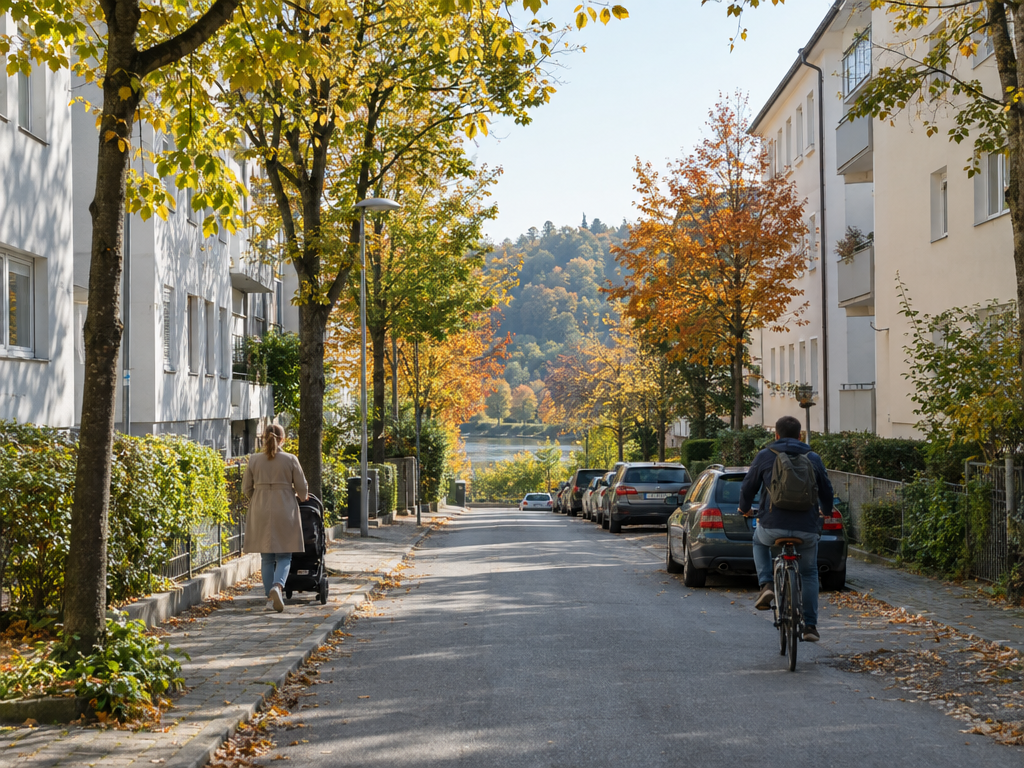
Untergiesing lies lower down, between the escarpment and the Isar. It is calmer here, and the Isar meadows are just a few steps away, giving dogs plenty of room to run. For a stay with your four-legged friend close to the centre, we have a separate page on dog-friendly apartments in Munich. From Lehel it takes around 15 to 20 minutes to reach Giesing by S-Bahn from Isartor or by bus.
Messestadt Riem and Freimann: neighbourhoods on the outskirts
Messestadt Riem
Messestadt Riem lies about ten kilometres east of the centre on the site of the old airport, which closed in 1992. Today it is home to Messe München (the trade fair centre), a new residential quarter and the Riemer Park with its bathing lake. The location is handy for trade fair visitors, but there is little going on in the evening. You can see which fair is on when in our calendar of Messe Munich 2027 dates.
From Lehel, take the U5 to Innsbrucker Ring and change there to the U2, which takes 25 to 30 minutes in total. That is why many guests prefer to stay in the city centre during a trade fair and travel out in the morning. We have summarised what to bear in mind on our page about accommodation near Messe Munich.
Freimann and Fröttmaning
Freimann is part of the Schwabing-Freimann district in the north of Munich. It is known for the Studentenstadt (student village), the MOC event centre and the northern part of the English Garden with the Aumeister beer garden. Further north, in Fröttmaning, stands the Allianz Arena.
The U6 takes you straight to Freimann and Fröttmaning; from Lehel, with a change at Odeonsplatz, it takes 25 to 30 minutes. On match days the U6 is very crowded. As a place to live, Freimann is quiet and green, but rather out of the way for exploring the city.
Best Munich neighbourhoods: our recommendation for your stay
There is no single best neighbourhood in Munich; it depends on what you have planned. From many conversations with guests, we have come up with a simple rule of thumb:
- First visit, two to four days: Altstadt, Lehel or Maxvorstadt. You can reach the main sights on foot.
- Nightlife and the scene: Glockenbachviertel and Isarvorstadt, at some cost to your sleep.
- Quiet yet central: Lehel, Haidhausen or the Au.
- Longer stays with children: Neuhausen, Schwabing-West or the Dreimühlenviertel.
- Trade fairs or appointments in the east: Haidhausen or Lehel, with the U-Bahn out to Riem.
Munich’s most popular neighbourhoods are also the most expensive, because so many people want to live there. If you are comparing areas before moving to Munich, try out the nicest ones as a guest first. A weekend in Haidhausen feels different from a weekend in Schwabing. If you can work remotely, a workation of a week or two is another good way to test a neighbourhood.
How expensive and how safe are Munich’s neighbourhoods?
Munich is one of the most expensive rental markets in Germany. Compare the city’s neighbourhoods by rent and you will see big differences. The Altstadt, Lehel, Bogenhausen, Schwabing and Maxvorstadt are among the priciest areas, while the outer districts are usually somewhat cheaper. We explain what the Munich rent index says about the different locations in a separate guide, and tips for your move are in our guide to the Anmeldung in Munich (registering your address).
For the first few weeks after moving, a fixed-term apartment helps, giving you a base from which to view flats in different neighbourhoods. We describe how this works on our page about temporary housing in Munich. How to then rent an apartment in Munich of your own is covered in a separate guide.
As for crime in Munich’s neighbourhoods: according to the Munich Police Headquarters’ 2025 security report, Munich is once again the safest major city in Germany. There are no bad areas in the sense of places you need to avoid. Around the Hauptbahnhof and the Alter Botanischer Garten there is more going on at night than elsewhere, so the usual big-city awareness is sensible there.
Conclusion: first the neighbourhood, then the flat
The 25 official districts tell you little about how a neighbourhood actually feels. For a short visit, short distances are what count, so choose the Altstadt, Lehel, Maxvorstadt or Haidhausen. If you are staying longer, try out several Munich neighbourhoods before signing a tenancy agreement. Our boarding house in Munich in Lehel opens in autumn 2027 and is a central base for both.
Frequently asked questions about Munich neighbourhoods
How many districts does Munich have?
Munich has 25 official districts (Stadtbezirke), from Altstadt-Lehel (number 1) to Laim (number 25). In everyday life people refer to many more neighbourhoods, such as Lehel, the Glockenbachviertel or Haidhausen, which officially form part of a larger district.
Which is the most beautiful neighbourhood in Munich?
That is a matter of taste. Frequently mentioned are Haidhausen with its French Quarter, Lehel, Schwabing and the Glockenbachviertel, because they offer lots of period buildings, green spaces and short distances to the city centre.
What is the most expensive neighbourhood in Munich?
The most expensive neighbourhoods in Munich include the Altstadt, Lehel, Bogenhausen with Herzogpark, and Schwabing. The city publishes specific figures in its Mietspiegel (rent index); they vary considerably depending on location and year of construction.
Which area of Munich should tourists stay in?
For a first visit, the Altstadt, Lehel, Maxvorstadt and Haidhausen are the most practical, because most of the sights are within walking distance. If you want to go out in the evening, the Glockenbachviertel is a good choice.
Are there dangerous areas in Munich?
No, there are no areas in Munich that you need to avoid. According to the Munich Police Headquarters’ 2025 security report, Munich is once again the safest major city in Germany. Around the Hauptbahnhof, normal awareness is advisable at night.
Which is the university quarter in Munich?
The university quarter is Maxvorstadt. It is home to Ludwig Maximilian University and the Technical University, along with lots of cafés, bookshops and pubs around Amalienstraße and Türkenstraße.
Where can I find a map of Munich’s districts with street names?
Munich’s Statistical Office offers an overview map of the 25 districts at a scale of 1:40,000 on stadt.muenchen.de, showing sub-districts and streets.
What is the French Quarter in Munich?
The French Quarter (Französisches Viertel) is part of Haidhausen around Orleansplatz. Its streets are named after places from the Franco-Prussian War of 1870/71, such as Wörthstraße and Sedanstraße.

Daniel Schulz · Managing Director of residir GmbH
He has eight years’ experience in letting and managing serviced apartments and has looked after more than 80,000 guest stays. More about Daniel Schulz