

By Daniel Schulz, residir GmbH · Last updated: 14 October 2026
For hosts, holiday rental insurance in Germany usually rests on three pillars: buildings insurance (Wohngebäudeversicherung), contents insurance (Hausratversicherung) and liability cover that explicitly includes letting. What matters most is that your insurer knows about the holiday letting; otherwise it may reduce a claim or cancel the policy. Guests mainly need personal liability insurance (Privathaftpflicht) that covers damage to rented property and the loss of other people’s keys.
We are currently fitting out a building with 54 apartments in Lehel, so we look at this topic from a host’s point of view. This guide explains the policies for hosts and for guests, the duty of disclosure under the German Insurance Contract Act and typical claims. We deliberately do not name providers or prices. The information is correct as of October 2026; this article is general information and not insurance or legal advice.
In this article:
- Which insurance do you need?
- Telling your insurer: duty of disclosure
- Buildings insurance
- Contents insurance
- Liability cover for hosts
- Loss of rent, glass, electronics
- Insurance for guests
- Typical claims
- Checklist
- From experience
- Conclusion
- FAQ
| Insurance | For whom | What it typically covers | What to watch out for |
|---|---|---|---|
| Buildings insurance (Wohngebäudeversicherung) | Owner | The building against fire, escape of water, storm and hail | Declare the holiday letting, check natural hazards cover |
| Contents insurance (Hausratversicherung) | Host | Furniture, kitchen, linen and electronics in the flat | A separate policy for the let property |
| Property owner’s liability (Haus- und Grundbesitzerhaftpflicht) | Host | Third-party damage caused by the property or building | Is letting included? If commercial, business liability |
| Loss of rent | Host | Lost income after an insured event | Usually a clause in the buildings policy |
| Personal liability (Privathaftpflicht) | Guest | Damage the guest causes to others | Damage to rented property, contents, loss of keys |
Which holiday rental insurance do you need?
Private hosts in Germany are not legally obliged to insure a holiday apartment. Even so, hardly anyone lets without cover, because a single water damage claim can wipe out several years of income. Banks usually require buildings insurance when they finance a property, and in a condominium owners’ association (Eigentümergemeinschaft) insuring the common property at replacement value and taking out property owner’s liability insurance are part of proper management under Section 19(2) no. 3 WEG (Wohnungseigentumsgesetz, the German Condominium Act).
Which cover you need as a host depends on three questions. Do you own the whole building or just one flat in it? Who owns the furniture and contents? And are you privately letting a single flat or several units with services? The answers determine whether you need your own buildings policy, how high the contents sum insured must be and which liability cover fits.
Letting a holiday apartment: duty of disclosure and increased risk
The most common mistake has nothing to do with choosing the right policy: many hosts simply do not tell their insurer that a changing stream of guests is staying in the flat. If you plan to let your holiday apartment, inform your insurer before the first booking, not after the first claim.
What the German Insurance Contract Act requires
Before the contract is concluded, Section 19(1) VVG (Versicherungsvertragsgesetz, the German Insurance Contract Act) requires you to disclose every risk circumstance the insurer asks about in text form (Textform, e.g. a letter or email). If the application asks about letting, your answer must be correct. After the contract is concluded, Section 23 VVG applies: you may not increase the risk (Gefahrerhöhung) without the insurer’s consent, and if you later realise that you have done so, you must notify the insurer without undue delay.
Whether switching from owner-occupation or a long-term tenancy to holiday letting counts as an increase in risk is not laid down in the law; it depends on the policy and the individual case. More guests, frequent changeovers and keys in many hands are reasons why many insurers see it that way. The safe solution is to notify the insurer in writing and obtain confirmation that letting to holiday guests is covered.
What happens if you say nothing
The consequences are set out in Sections 24 and 26 VVG. The insurer can terminate the contract, and with immediate effect if the breach was intentional or grossly negligent. If a loss occurs, the insurer owes nothing where the breach was intentional; in the case of gross negligence it may reduce the payout in proportion to the severity of the fault. Among other things, the insurer remains liable if the increased risk did not cause the loss.
For hosts this means: a letter or email to your insurer takes ten minutes, whereas a dispute over a reduced payout can drag on for months. The other steps before you start, from the permit to the tax office, are covered in our guide to renting out a holiday apartment.
Buildings insurance: explicitly include holiday letting
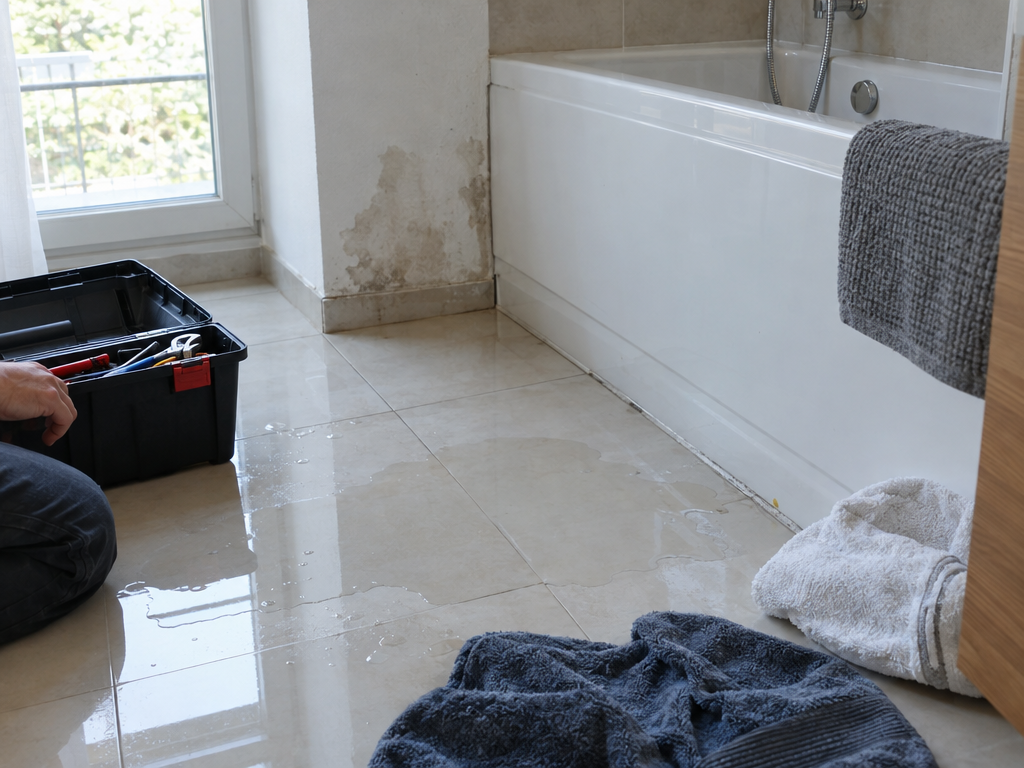
Buildings insurance (Wohngebäudeversicherung) protects the structure itself: walls, roof, fitted kitchen, bathrooms, pipes and heating. Cover normally includes fire, escape of water, storm and hail. For a holiday apartment in a house you own, buildings insurance is the most important element, because fire and water damage to the building can quickly run into five or six figures.
With a freehold flat (Eigentumswohnung), the owners’ association insures the building through the property manager (Verwalter). In that case, tell the manager about the holiday letting so they can check whether the buildings policy takes it into account. Whether you are allowed to let your flat to holiday guests at all is determined by the declaration of division (Teilungserklärung) and the community rules (Gemeinschaftsordnung), not by the insurer.
Natural hazards
Heavy rain, flooding, sewage backflow and landslides are not automatically included in many buildings policies. Natural hazards insurance (Elementarschadenversicherung) adds this cover and is particularly important for properties close to rivers or on slopes. Whether your policy includes it is stated in the policy schedule, not in the advertising.
54 apartments in Lehel from autumn 2027
From autumn 2027, residir GmbH will let a total of 54 apartments between 25 and 50 m² at Ländstraße 6, each with its own kitchen, fast Wi-Fi, towels and bed linen, plus 24-hour safe check-in. You can find out how the building is set up on our page about our boarding house in Munich.
Contents insurance for a let holiday apartment
Contents insurance (Hausratversicherung) for a let holiday apartment covers the furnishings: furniture, mattresses, kitchen appliances, crockery, linen, television and décor. Cover usually includes fire, escape of water, storm and hail, as well as burglary, robbery and vandalism following a break-in. The sum insured should match the replacement value of all contents; otherwise you risk being underinsured.
One point surprises many hosts: their private contents insurance usually applies only to the home they live in themselves. For a second flat that you let to guests, you will normally need a separate policy or an explicit agreement. Ask specifically about contents insurance for a holiday apartment with changing guests.
Theft by guests
If a guest walks off with the hairdryer or the duvet, that is not burglary, because they had a key. Simple theft is not covered by many standard policies. Against small losses, an inventory list, photos after every clean and a deposit help, and for bookings via platforms, their own damage policies too.
Holiday rental insurance for hosts: the right liability cover
As a host, you are liable if a guest is harmed because of the condition of the flat or the property. This is known as the duty to maintain safety (Verkehrssicherungspflicht): loose stair treads, a wobbly balcony railing, a path not cleared in winter. Liability insurance for the holiday apartment pays justified claims and defends you against unjustified ones.
Personal liability, property owner’s liability or business liability
- Personal liability (Privathaftpflicht): some policies include letting individual rooms or a flat, often with limits. Whether this applies to a holiday apartment is stated in the terms and conditions.
- Property owner’s liability (Haus- und Grundbesitzerhaftpflicht): the classic landlord’s liability cover for let houses and flats. In owners’ associations it usually already exists for the common property.
- Business liability (Betriebshaftpflicht): necessary if the letting is commercial, for example with several units including cleaning and services.
Anyone running several flats with hotel-style services is, organisationally, already close to an aparthotel in Munich and should discuss liability cover with the insurer as a business. Holiday rental insurance for hosts that only knows about private use no longer fits in that case.
Loss of rent, glass and electronics: useful add-ons
Loss of rent
If the kitchen burns out or the bathroom floods after a burst pipe, bookings are lost for weeks. Many buildings policies contain a time-limited clause covering loss of rent after an insured event. Check whether this clause also applies to holiday letting and how the loss is calculated. A standalone loss-of-rent insurance against empty weeks or cancellations does not exist in that form.
Glass
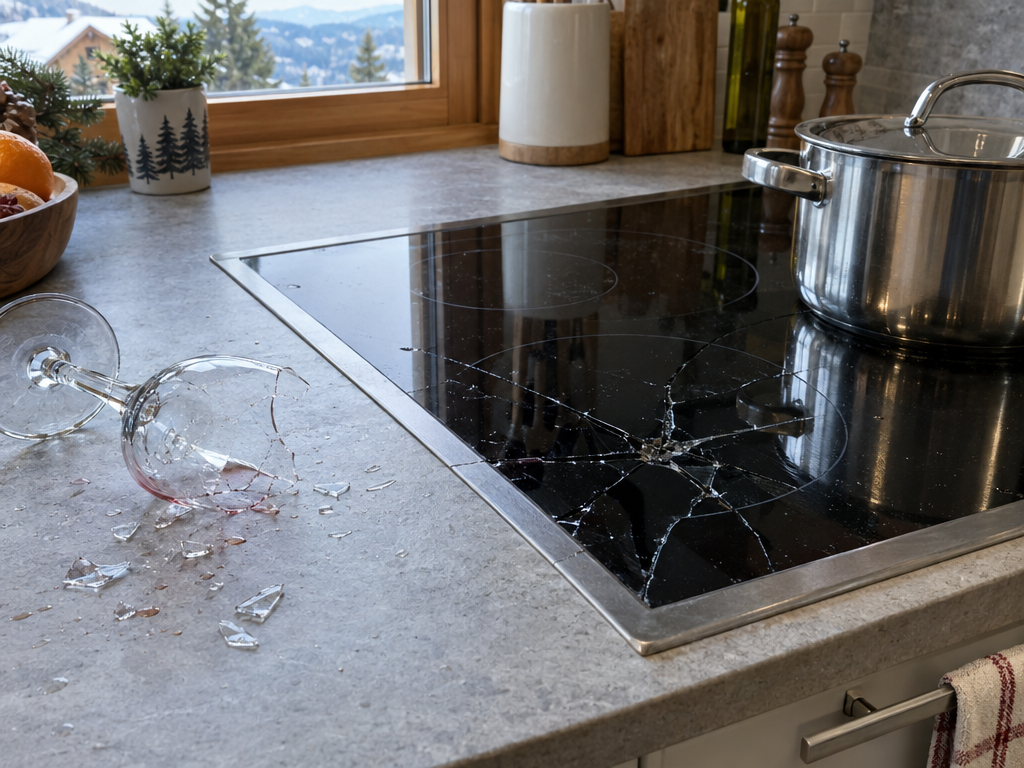
Glass insurance pays for breakage of windows, glass doors, shower screens or ceramic glass hobs. In a holiday apartment with many guests, a cracked ceramic hob is not a rare occurrence. Whether the add-on is worthwhile depends on how much glass there is in the flat.
Electronics
Televisions, bean-to-cup coffee machines and routers are usually covered by contents insurance only against the classic perils, not against falling off the table or liquid spills. Electronics insurance covers such damage. It rarely pays off for inexpensive devices, but it may for expensive technology.
Insurance for guests: personal liability in a holiday apartment
Guests should also check their insurance before travelling. The most important policy is personal liability insurance (Privathaftpflicht): it pays if you negligently damage something in the holiday apartment. Whether it pays depends on what was damaged.
Damage to the rented flat and its contents
Damage to the rented flat itself, such as a burn mark on the parquet or a damaged door, is what insurers call damage to rented real property (Mietsachschäden an Immobilien). Many policies include it. Damage to movable items, i.e. contents such as the sofa, crockery or television, was excluded for a long time. Better policies now cover it for holiday accommodation, often up to a limit.
Normal wear and tear, glass damage handled by glass insurance and intentional damage are not covered. If you are on a business trip, for example staying in accommodation near Messe Munich, ask your employer beforehand whether damage on business trips is covered by the company.
Lost keys
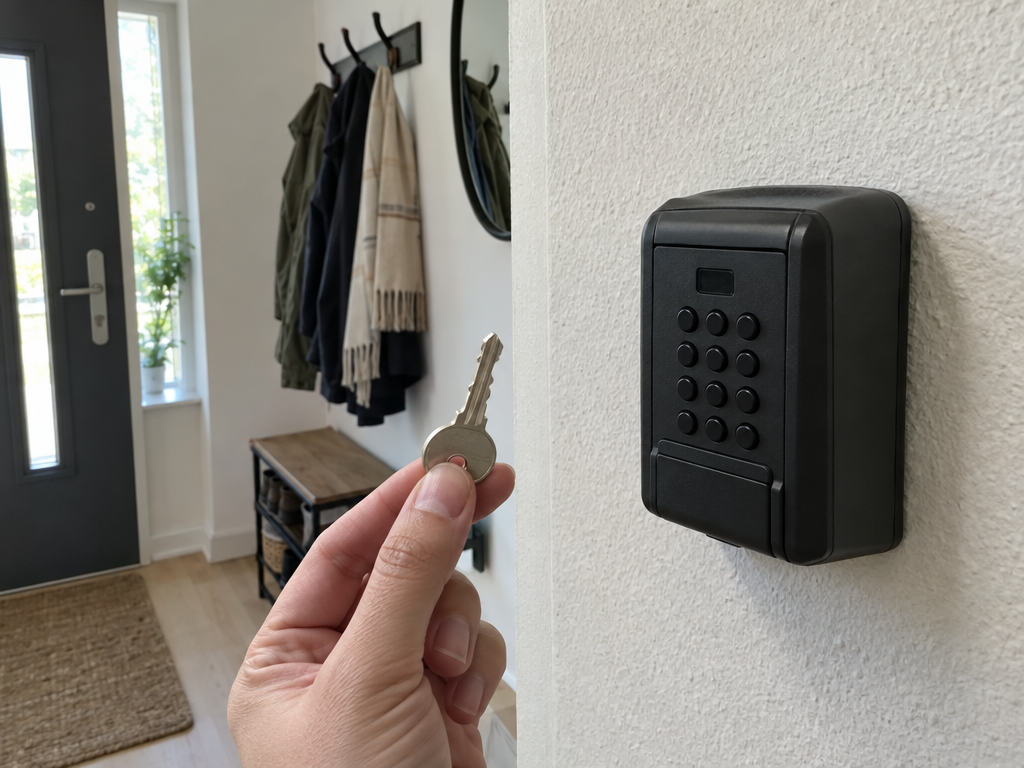
If a guest loses the flat key, it can become expensive when the host has to replace locks or a master key system for security reasons. Many personal liability policies cover the loss of other people’s private keys, usually up to a maximum amount. With code locks and key safes, the risk disappears.
If the trip falls through
In case you cannot travel at all, there is trip cancellation insurance (Reiserücktrittsversicherung); when it is worth having is explained in our guide to holiday rental cancellation.
Damage in a holiday apartment: which insurance pays?
The following cases are typical examples, not a promise for any particular policy. They show which insurance is normally responsible. Whether it pays depends on the terms and on who is at fault.
| Claim (example) | Who is usually liable | Which insurance may apply |
|---|---|---|
| Guest lets the bath overflow, water leaks into the flat below | Guest, if negligent | Guest’s personal liability; for damage to the building, also the buildings insurance |
| Burst pipe in the wall, flat uninhabitable for two weeks | Nobody at fault | Buildings insurance, loss of rent depending on the clause |
| Pan falls on the ceramic hob, glass cracks | Guest, if negligent | Host’s glass insurance or guest’s personal liability |
| Red wine on the sofa | Guest, if negligent | Guest’s personal liability, if movable rented items are covered |
| Guest slips on an icy outside staircase | Host, if they breached the duty to clear snow and grit (Räum- und Streupflicht) | Host’s property owner’s liability |
| Key lost, master key system must be replaced | Guest | Guest’s personal liability with lost-key cover |
| Fire caused by a candle | Guest, if negligent | Host’s buildings and contents insurance, which can then recover the cost from the guest |
| Television missing after departure | Guest | Usually no insurance; deposit or platform damage policy |
What to do when damage occurs
- Document the damage immediately: photos, date, time, witnesses.
- Prevent further damage, for example by turning off the water or securing windows.
- Guest and host inform each other in writing.
- The guest reports the damage to their personal liability insurer, the host to their buildings or contents insurer.
- Obtain a quote or invoice and keep damaged items until the claim is settled.
Much damage can be avoided if the rules are clear in advance. No smoking, no candles, no parties and a request to report damage immediately belong in your holiday rental house rules, which guests should see before booking.
Checklist: insuring your holiday apartment properly
If you want to insure your holiday apartment, it is best to work through this list once from start to finish. It does not replace individual advice.
- Notify your buildings, contents and liability insurers of the holiday letting in writing and request confirmation.
- For freehold flats, inform the property manager and check the association’s policy.
- Check natural hazards cover for heavy rain and sewage backflow.
- Set the contents sum insured at the replacement value of the furnishings and create an inventory list with photos.
- Clarify liability: personal liability that includes letting, property owner’s liability or business liability.
- Read the loss-of-rent clause and its duration in the buildings policy.
- Assess glass and electronics cover based on how the flat is equipped.
- Set out the deposit and damage rules in your booking conditions.
- Organise snow clearing and gritting for the winter.
- Compare your policies with how the business actually runs every year.
From experience: the damage that really happens
In eight years with serviced apartments, Daniel Schulz has looked after more than 80,000 guest stays. Most of the damage during that time was minor: broken glasses, stains on upholstery, a lost key. The expensive cases were rarely caused by guests, but by technology and water, such as a leaking dishwasher connection.
This suggests a simple order of priorities. First, buildings and liability insurance cover the big risks, then contents insurance protects the furnishings. If you are looking for insurance for a holiday apartment and its contents, do not start with glass breakage. A deposit and clear agreements with the guest settle minor damage faster than any insurance. And if you let one of the many holiday apartments in Munich, you also have neighbours in the building, for whom water damage is just as annoying.
Conclusion
Good holiday rental insurance starts with telling all your insurers about the letting and then consists of buildings, contents and suitable liability insurance, while guests are well protected by personal liability cover that includes damage to rented property and lost keys; if you let to long-stay guests, for example as one of the furnished apartments in Munich, check the same points for long-term letting.
Frequently asked questions about holiday rental insurance
What insurance does a holiday apartment need?
For hosts, three elements matter: buildings insurance that explicitly includes holiday letting, contents insurance for the furnishings of the let flat and liability cover that includes letting, such as property owner’s liability insurance (Haus- und Grundbesitzerhaftpflicht). Loss of rent, glass and electronics are add-ons. Private hosts are not legally required to take out these policies.
Do I have to tell my insurer that I let a holiday apartment?
Yes, you should. Under Section 19 VVG (German Insurance Contract Act) you must answer all the insurer’s questions truthfully before the contract is concluded, and under Section 23 VVG you may not increase the insured risk after conclusion without consent. Whether holiday letting counts as an increase in risk depends on the policy. If you report it in writing and have the cover confirmed, you avoid disputes when a claim arises.
Does contents insurance pay out for a let holiday apartment?
Only if the policy covers the flat and the letting. Many contents policies are tailored to the home you live in yourself. For a let holiday apartment you will normally need a separate policy or an explicit agreement. Theft by guests who have their own key is not burglary under many standard policies and is therefore not covered.
Will my personal liability insurance pay if I damage something in a holiday apartment?
Often yes, but not always. Damage to the rented flat itself, such as the floor or doors, is included in many policies as damage to rented property. Damage to contents such as furniture, crockery or the television, on the other hand, is often only covered by better policies, frequently up to a limit. No insurance pays for normal wear and tear.
Who pays if a guest causes damage in a holiday apartment?
In principle, the guest who caused the damage through their own fault is liable. They report it to their personal liability insurer, which pays depending on the policy. A deposit gives the host additional security. If nobody pays, the host is left with the cost, unless their own contents or buildings insurance covers the cause of the damage, for example escape of water or fire.
What happens if the keys to a holiday apartment are lost?
If a guest loses the key, the host can demand compensation and, in the worst case with a master key system, the replacement of the cylinders. Many personal liability policies include the loss of other people’s keys, usually up to a limit. Check before you travel whether your policy covers this.
Do I need loss-of-rent insurance as a host?
Standalone loss-of-rent insurance is rarely necessary. It is more important that your buildings insurance includes loss of rent after an insured event such as fire or escape of water. Check whether the policy takes holiday letting into account and for how long it pays. This clause does not cover losses from cancellations or empty weeks.

Daniel Schulz · Managing Director of residir GmbH
He has eight years of experience in letting and managing serviced apartments and has looked after more than 80,000 guest stays. More about Daniel Schulz