
By Daniel Schulz, residir GmbH · Last updated: 14 October 2026
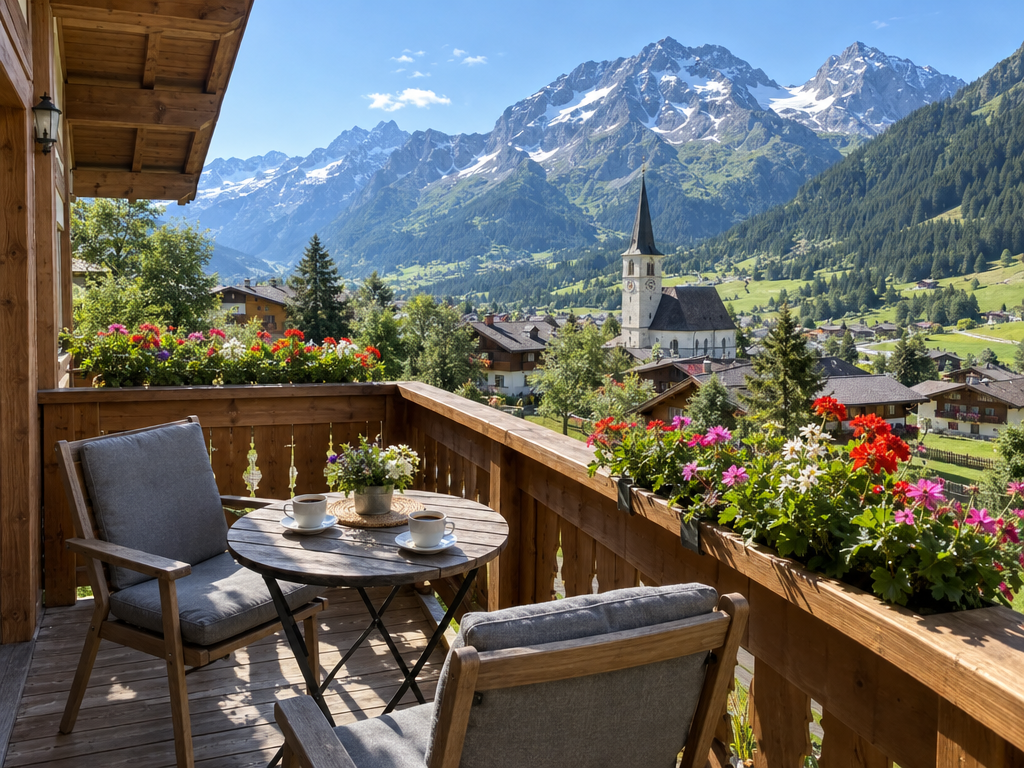
A holiday apartment in the Alps can be found in four main areas: the German Alps between the Allgäu and the Berchtesgadener Land, Tyrol and the rest of Austria, South Tyrol, and Switzerland. Hikers travel from late June to mid-September, skiers between December and Easter. Before you book, it pays to check the location and altitude, parking, ski room and the visitor’s tax (Kurtaxe), which almost every mountain village adds on per night.
We are currently fitting out a building with 54 apartments in Lehel, and many of the enquiries we receive come from guests who want to combine a few days in the city with a week in the mountains. This guide brings together, from a guest’s point of view, what sets a mountain apartment apart from a city flat, which region suits which time of year and how to use Munich as your base. We deliberately do not name any providers. Information correct as of October 2026.
In this article:
- The regions at a glance
- When to go: summer and winter
- What to check before booking
- Booking on a budget
- Combining city and mountains
- Packing tips for the mountains
- Conclusion
- Frequently asked questions
| Region | Country | Typical for | Journey from Munich (approx.) |
|---|---|---|---|
| Werdenfelser Land, Tegernsee, Chiemgau | Germany | Hiking, mountain lakes, smaller ski areas | Train approx. 1 to 1.5 h |
| Allgäu | Germany | Alpine pastures, family walks, cross-country skiing | Train approx. 2 to 2.5 h |
| Berchtesgadener Land | Germany | Königssee, Watzmann, national park | Train or car approx. 2 to 3 h |
| Tyrol, Salzburger Land | Austria | Large ski areas, high valleys, glaciers | Innsbruck by train just under 2 h |
| South Tyrol | Italy | Dolomites, vineyards, long autumn season | Bolzano by train approx. 4 h |
| Graubünden, Bernese Oberland, Valais | Switzerland | High Alps, dense rail network, high prices | from approx. 4 h |
Holiday apartment in the Alps: the regions at a glance
The Alps stretch across eight countries, but for visitors coming via Germany four areas matter most. They differ less in scenery than in price level, language, how you get there and what the village around your apartment has to offer.
Bavarian Alps, Allgäu and Berchtesgadener Land
A holiday apartment in the German Alps will always be in southern Bavaria, on a narrow strip running from Lake Constance to the Watzmann. Compared with Tyrol or Switzerland, the mountains here are lower: at 2,962 metres the Zugspitze is the highest peak, and most villages sit between 600 and 1,000 metres. The Bavarian side of the Alps is the obvious choice if you want a short journey, especially the Werdenfelser Land around Garmisch-Partenkirchen, Tegernsee and Schliersee, and the Chiemgau.
A holiday flat in the Allgäu suits families and leisurely walkers, with gentle alpine pastures, plenty of lakes and cross-country trails in winter. An apartment in the Berchtesgadener Land sits on the edge of Germany’s only Alpine national park, with the Königssee and the Watzmann right on your doorstep. Lakes, the Alpine foothills and the other regions from Franconia to the Bavarian Forest are covered in our guide to finding a holiday apartment in Bavaria.
Tyrol and the rest of Austria
The big argument for Austria is choice: almost every mountain village has holiday apartments, guesthouses and apartment buildings. A holiday apartment in Tyrol is usually in one of the large valleys such as the Zillertal, Ötztal or Stubaital, and there are also the Salzburger Land, Vorarlberg and Carinthia. The major ski areas reach above 3,000 metres, and on the glaciers the season can start as early as autumn, depending on snow.
To use motorways and expressways in Austria you need a vignette (toll sticker), which is also available digitally. Some tunnels and mountain pass roads charge an extra toll, while many valley roads are free.
South Tyrol and the Italian Alps
Most German-speaking guests looking for an apartment in the Italian Alps head for South Tyrol. The province is bilingual, and you can get by in German almost everywhere in daily life. The Dolomites, vineyards and apple orchards lie close together, and south of the main Alpine ridge the sun shines more often than in the north.
That makes a holiday apartment in South Tyrol worthwhile in spring and autumn too, when the rustic wine taverns (Buschenschänke) open for Törggelen season. Further west lie Trentino, Lombardy and the Aosta Valley, each with their own ski areas. On Italian motorways you pay distance-based tolls.
Switzerland
An apartment in the Swiss Alps takes you into the high mountains: Valais has most of the 4,000-metre peaks, while Graubünden and the Bernese Oberland are the other major holiday regions. The rail network reaches even small valleys, and some resorts such as Zermatt are car-free.
Accommodation, groceries and restaurants cost considerably more in Switzerland than in Germany, so having your own kitchen saves a great deal here. You need a vignette for the motorway, payment is in Swiss francs, and almost all shops take cards.
When to go: your Alpine holiday apartment in summer and winter
Summer: hiking, mountain lakes and alpine pastures
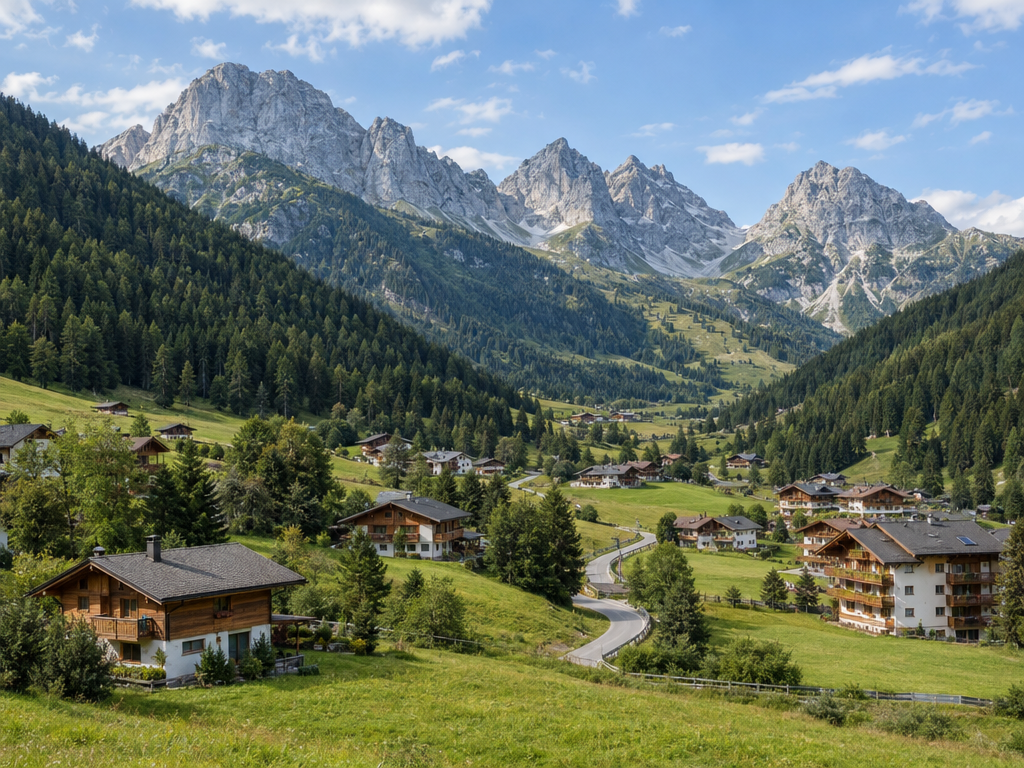
High season for a summer holiday apartment in the Alps runs from late June to mid-September. That is when alpine huts and mountain inns are open, cable cars run daily and you can swim in the mountain lakes. High-altitude paths above roughly 2,000 metres are often not free of snow until July.
During the summer school holidays in Germany’s larger federal states, apartments in well-known valleys get booked up early. June and September are quieter, prices are lower and there is more room on the trails.
Winter: a ski holiday in a self-catering apartment
In the large ski areas the winter season usually starts in early December and ends around Easter. For families and groups, a ski holiday in an apartment is often cheaper than a hotel with half board, because you cook for yourselves and the cost is shared between several people.
The busiest and most expensive weeks are around Christmas and New Year and the carnival (Fasching) school holidays. In January and March you will find more choice, and in March often more sunshine on the slopes too.
Spring and autumn: the shoulder season
In April, May, October and November many cable cars, huts and some restaurants close for maintenance and staff holidays. In return, this is when a holiday apartment in the mountains is at its cheapest. Before booking, check which lifts will be running during your week, otherwise you may find yourself standing in front of closed ticket offices.
Stay in Lehel before or after your mountain days
From autumn 2027, residir GmbH will be letting apartments at Ländstraße 6, each with its own kitchen, bed linen and towels. There are washing machines and dryers in the building for wet hiking gear, luggage lockers for suitcases, and check-in is available around the clock via safe check-in. You can find out how the building works on our page about our boarding house in Munich.
Holiday apartment in the mountains: what to check before booking
A mountain apartment works differently from one in the city. A handful of details decide whether you stroll to the cable car in the morning or start the day digging your car out of the snow.
Location and altitude
A village at 800 metres has different conditions from a hamlet at 1,600 metres. The higher the apartment, the more reliable the snow in winter, but the access road is often steeper and narrower too. Ask how far it is to the cable car, ski bus, supermarket and station, and whether you can walk these distances.
Holiday apartment with mountain views: check which way it faces
Almost every listing promises mountain views, but that does not always mean a panorama from the balcony. Ask for a photo taken from the window and find out which direction the apartment faces. In narrow valleys, north-facing flats sometimes get no direct sunlight for weeks in winter, so a south-facing apartment is worth twice as much.
Getting there: winter tyres, snow chains and vignette
The Alpine countries have different rules in winter. In Germany you may only drive in snow, ice and slippery conditions with winter tyres; in Austria the requirement applies in wintry conditions from 1 November to 15 April. In Italy, many roads, including in South Tyrol, require winter equipment from 15 November to 15 April. Switzerland has no general requirement, but if you cause an accident on summer tyres you share the liability.
Wherever you see a blue sign with a snow chain, chains must be fitted. Practise once at home rather than in the dark on a slope. These rules are correct as of October 2026; check them with a motoring organisation before you set off. Travelling by train avoids the issue altogether: many mountain villages have a station or a bus connection to the nearest one.
Parking, ski room and drying room
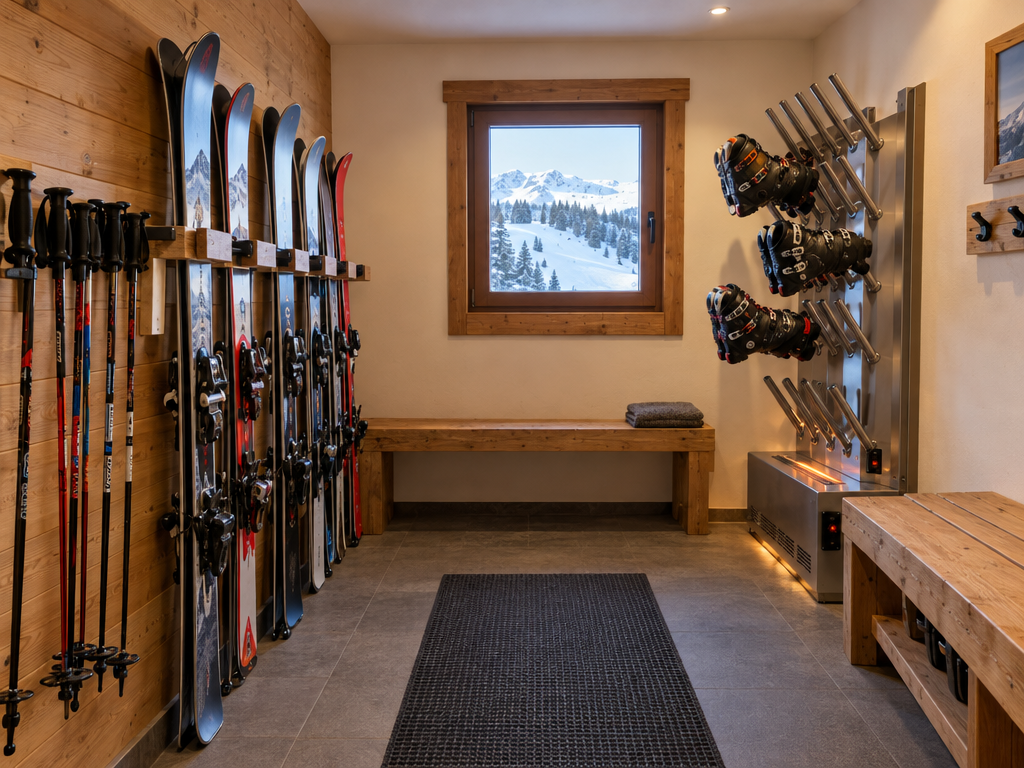
Find out whether the apartment comes with its own parking space and whether it is cleared of snow in winter. In popular resorts, public car parks are scarce and charge fees. A lockable ski room with a boot dryer is worth its weight in gold in winter; otherwise skis and wet boots end up in the hallway.
In summer, what counts is a secure place for bikes or e-bikes with a power socket. A drying room, a washing machine or at least a clothes horse helps after every rainy day on the trail.
Visitor’s tax and guest card
In almost all mountain resorts, a charge per person per night is added to the rent. In Germany it is called Kurbeitrag, in Austria Ortstaxe or Aufenthaltstaxe, in South Tyrol Gemeindeaufenthaltsabgabe and in Switzerland Kurtaxe. Depending on the resort, children are exempt or pay less.
Ask whether the charge is included in the price shown. In return you often receive a guest card which, depending on the region, covers buses in the valley or gives discounts on cable cars, museums and swimming pools. In some regions, cable car rides are even included in summer.
Facilities and house rules
After a day on the slopes, many guests look for a holiday apartment with a sauna in the building or a thermal spa nearby. Ask whether the sauna is included in the price, whether you need to book time slots and when it is switched on.
For families, separate bedrooms, a proper kitchen and a washing machine matter more than the size of the balcony. In many villages, children’s ski schools and toboggan slopes are within walking distance, so ask about those rather than about the biggest ski area.
If you are looking for an Alpine apartment where dogs are welcome, you will have more choice in the countryside than in the city. Check the surcharge, how many animals are allowed and whether your dog may be left alone in the apartment. On pastures with grazing cattle, keep your dog on a short lead: mother cows defend their calves.
Finding a cheap holiday apartment in the Alps
Prices fluctuate more in the mountains than in the city, because almost everything depends on school holidays and snow. These levers help you save:
- Shoulder season: June, September and the weeks after Easter are much cheaper than July, August and the Christmas holidays.
- Smaller villages: a village in the valley next to a famous ski resort often costs less, and with the ski bus or car you are still at the lift quickly.
- Minimum stay: in high season, many hosts only let from Saturday to Saturday. On shorter stays, the final cleaning fee weighs more heavily per night.
- Total price: final cleaning, bed linen, visitor’s tax and parking are often extra. Work out the price per person per night before comparing offers.
- Self-catering: shopping in the valley is cheaper than eating at a restaurant or hut every evening, and in Switzerland this makes the biggest difference.
The most expensive option is a ski-in/ski-out apartment right in the ski area. Ten minutes on the ski bus often saves a noticeable amount. In large ski areas the lift pass can easily cost as much as the accommodation, so check multi-day passes, family rates and early-booking prices on the cable car companies’ official websites.
Combining city and mountains: Munich as your base
Many guests combine a few days in the city with an apartment within easy reach of the mountains. Munich is ideally placed for this: the Alps begin around 60 kilometres to the south, and trains leave Munich Central Station for the Werdenfelser Land, Tegernsee, Tyrol and South Tyrol.
Day trip: into the mountains by regional train
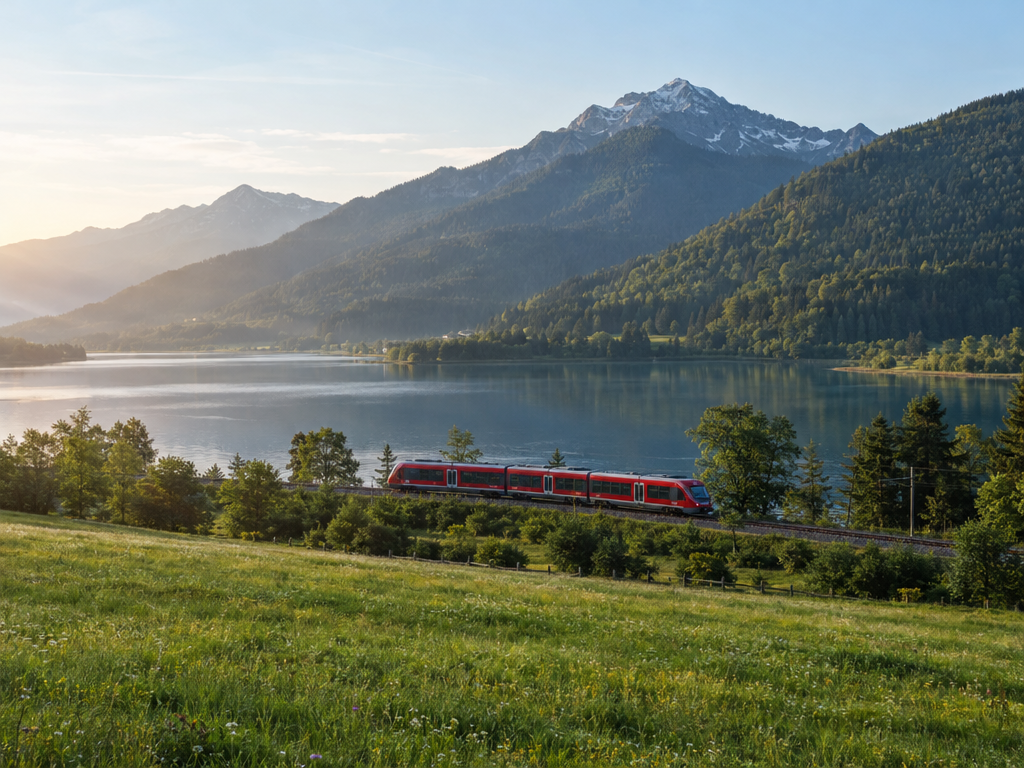
For a single day, the train is all you need. The regional train to Garmisch-Partenkirchen in the Werdenfelser Land takes around 80 to 90 minutes, and to Tegernsee, Schliersee or Lenggries about an hour (approximate times, as of October 2026). The Deutschlandticket (Germany-wide local transport pass) covers these regional trains within Germany.
Which peaks and lakes are worth visiting without an overnight stay, from the Herzogstand and the Wendelstein to the Zugspitze, is covered in our guide to the best day trips from Munich. Set off early: if you are on the train by eight o’clock, you will reach the mountain ahead of most day trippers.
A week away: city first, then mountains
For Tyrol, South Tyrol or Switzerland, a week on location makes more sense. Innsbruck is just under two hours away by train and Bolzano around four, so a day trip means spending half the day on the train. A good pattern is two or three nights in the city followed by a week in the mountains, or the other way round, ending your trip before flying home from Munich.
For your city days, you will find our building in Lehel under holiday apartments in Munich, just a few minutes’ walk from Isartor S-Bahn station. From there you are only minutes from the Central Station or the Ostbahnhof (East Station), where trains depart towards Rosenheim, Kufstein and Salzburg.
Trade fairs, work assignments and a weekend in the mountains
Not everyone comes on holiday. Many visitors attending a trade fair like to add a long weekend in the mountains. We have put together what matters when choosing accommodation for Messe Munich on a separate page.
Tradespeople and project teams working in the city during the week also enjoy heading into the mountains at the weekend. For longer assignments, workers’ accommodation in Munich with a kitchen is more practical than a flat in a mountain village with a long commute.
When it rains in the mountains
Rain in the mountains means postponing summit hikes, and gorges and steep paths become slippery. That is the time for thermal spas, museums or a day in the city. Near Munich, Therme Erding makes a full day out and is easy to reach by S-Bahn and bus.
Packing tips for the mountains
Holiday apartments in the mountains are usually set up for self-catering. Even so, here is what is often missing or belongs in your own luggage:
- Layered clothing: base layer, fleece, rain and wind jacket. Higher up, it can snow even in summer.
- Footwear: sturdy, broken-in hiking boots with good tread, plus slippers for the apartment.
- Sun protection: high-factor sun cream, sunglasses and a hat, as UV radiation increases with altitude.
- Small first-aid kit: blister plasters, painkillers, a head torch and a water bottle.
- For winter: spare gloves, a ski helmet, an ice scraper and snow chains in the car.
- Cash: not every alpine pasture or hut accepts cards.
- Kitchen: spices, your coffee in the right format and a cool bag for shopping in the valley.
Bed linen and towels are included in the price of many Alpine holiday apartments, but sometimes they cost extra or you have to bring your own. Check this before you travel, especially if you are coming by train and every kilo counts.
Plan your routes according to the mountain weather forecast and leave a note with your route in the apartment. The European emergency number 112 works in all Alpine countries.
Conclusion
A holiday apartment in the Alps suits hikers, skiers and families who like to cook for themselves and want more space than a hotel room offers. Choose your region according to journey time and budget, check location, parking, ski room and visitor’s tax before booking, and if you can, schedule your Alpine holiday outside the peak holiday weeks. If you are travelling with a four-legged friend and staying in the city before or after, you will find tips on dog-friendly apartments in Munich.
Frequently asked questions about holiday apartments in the Alps
How much does a holiday apartment in the Alps cost?
The price depends mainly on region, season and size. The shoulder season and smaller villages away from the famous ski areas are cheapest; Christmas, the carnival holidays and August are the most expensive. Add final cleaning, visitor’s tax and parking to the nightly rate before comparing offers.
Which Alpine region is best for a holiday apartment?
That depends on your journey, budget and what you want from your holiday. The German Alps and Tyrol are the quickest to reach from southern Germany, South Tyrol is sunnier and popular well into autumn, and Switzerland offers the highest mountains at considerably higher prices.
When is the best time for a holiday in the Alps?
For hiking, the best time is from late June to mid-September, when huts and cable cars are open. Skiers travel between early December and Easter. April, May, October and November are the cheapest months, but many lifts and huts are closed then.
Do I need winter tyres to drive to the Alps?
Yes, in winter you should always travel with winter tyres. In Germany they are required in snow and icy conditions, in Austria in wintry conditions from 1 November to 15 April, and in Italy many roads require winter equipment from 15 November to 15 April. Where signs indicate it, snow chains are mandatory (as of October 2026).
What is the Kurtaxe (visitor’s tax) in the Alps?
The Kurtaxe is a charge per person per night that almost all mountain resorts levy on top of the rent. Depending on the country it is called Kurbeitrag, Ortstaxe, Aufenthaltsabgabe or Kurtaxe. In return you often receive a guest card with free buses or discounts on cable cars.
Can you do a day trip to the Alps from Munich?
Yes, the Alps begin around 60 kilometres south of the city. The regional train to Garmisch-Partenkirchen takes around 80 to 90 minutes, and to Tegernsee about an hour. For Tyrol, South Tyrol or Switzerland, a stay of several days makes more sense.
What should a mountain holiday apartment have in winter?
The key things are a lockable ski room with a boot dryer, a parking space that is cleared of snow and short distances to the ski bus or lift. A drying room or washing machine helps with wet clothing, and a sauna in the building is a bonus after a day on the slopes.

Daniel Schulz · Managing Director of residir GmbH
He has eight years’ experience letting and managing serviced apartments and has looked after more than 80,000 guest stays. More about Daniel Schulz